









高エネルギー物理学


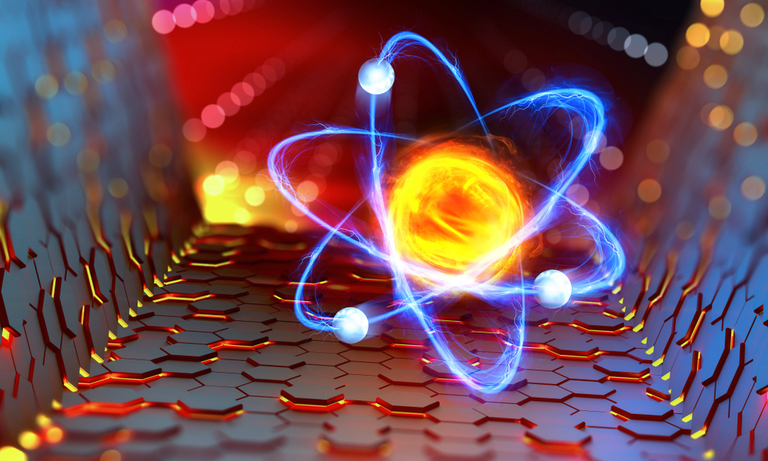
高エネルギー物理学 (素粒子物理学とも呼ばれます)は、物質や放射線を構成する最も基本的な要素と、それらの相互作用を研究する物理学の一分野です。「高エネルギー物理学」という名称は、素粒子が生成される自然条件に由来します。実際、素粒子は加速器における高エネルギー衝突のような、他の粒子との激しい衝突によって生成され、検出されます。
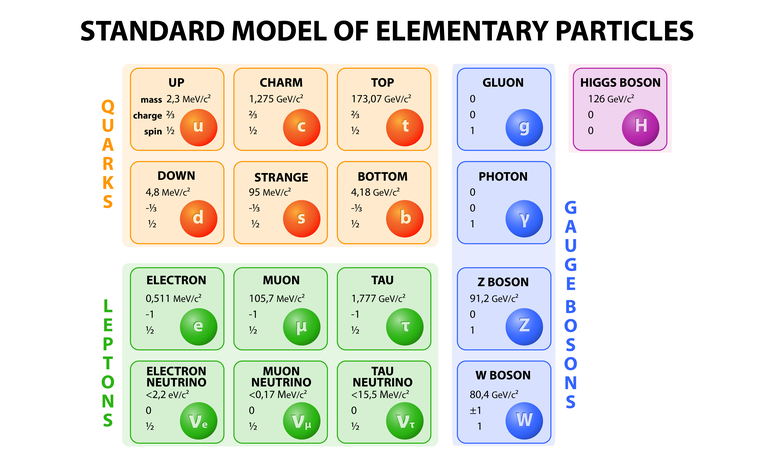
1970年代以降、素粒子物理学者は、物質の基本構造を『標準模型(Standard Model)』と呼ばれる一連の優美な方程式で記述してきました。このモデルは、宇宙で観測されるあらゆるものが、基本粒子と呼ばれるいくつかの構成要素から成り立ち、4つの力(強い力・弱い力・電磁力・重力)によって支配されていることを示しています。標準模型には、多様な種類の基本粒子(フェルミオン、ベクトルボソン、スカラーボソン)が含まれており、これらが組み合わさって多数の複合粒子を形成することで、発見されてきた数百種類の粒子を説明します。
長年にわたり、この標準模型は数多くの実験結果を説明し、多様な現象を高い精度で予測してきたため、現在では非常に精密に検証された物理理論と見なされています。しかし、標準模型が記述できるのは“宇宙のわずか4%”に過ぎず、「なぜヒッグス粒子の質量はこれほど小さいのか?」、「ダークマターは何でできているのか?」、「高エネルギー領域では、すべての力が一つに統一されるのか?」、「初期宇宙で反物質はどこへ消えたのか?」といった根本的な疑問はいまだ未解決のままです。
現在、高エネルギー物理学コミュニティは、以下のように相互に関連する科学的課題(Science Drivers)に導かれながら、これらの問いに挑んでいます:
- ヒッグス粒子を新たな発見の手がかりとして活用する
- ニュートリノ質量に関連する物理を追究する
- ダークマターの新たな物理を解明する
- 宇宙加速の理解:ダークエネルギーとインフレーション
- 未知の領域を探究する:新粒子・新相互作用・新たな物理原理
これらの科学的課題は、将来的な発見への強力な道筋を示すものです。HEPコミュニティは、実験的な科学発見の3つのフロンティア (前線)と、それを支える理論・計算研究によって構成されるプログラムを推進しています。さらに、このプログラムは、科学を可能にするための新たな加速器、検出器、計算技術の開発と統合されています。
High Energy Physics (HEP)プログラムの使命は、宇宙が最も根本的なレベルでどのように機能しているのかを理解することです。そのために、相互に関連する3つのフロンティアに沿って組織された戦略に基づき、新たな科学的発見を支えています。
エネルギーフロンティア
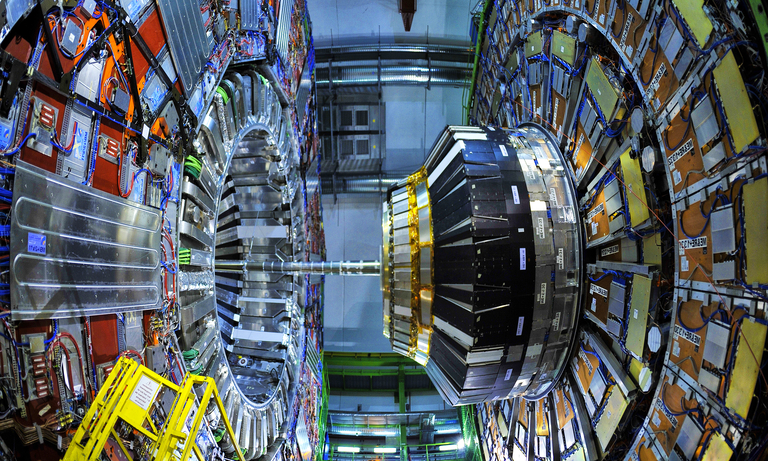
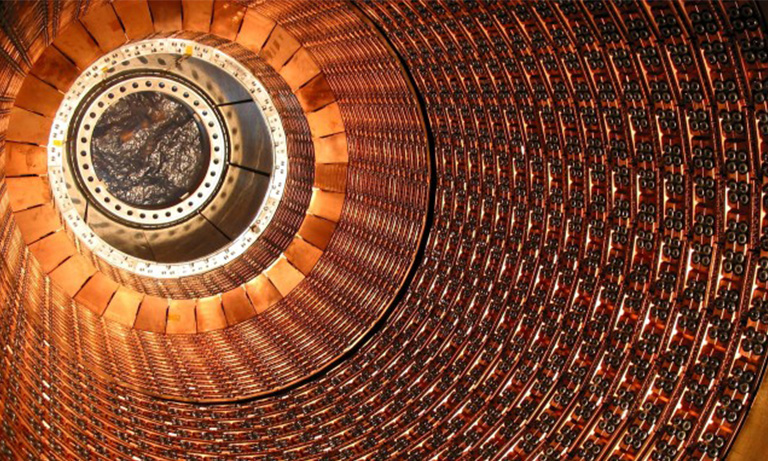
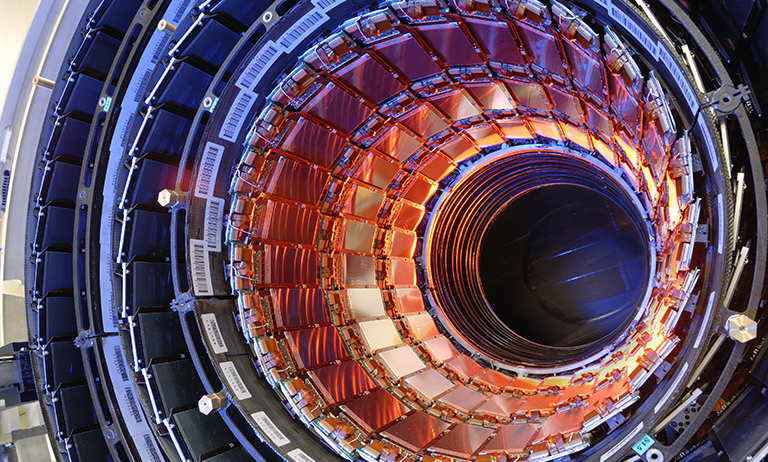
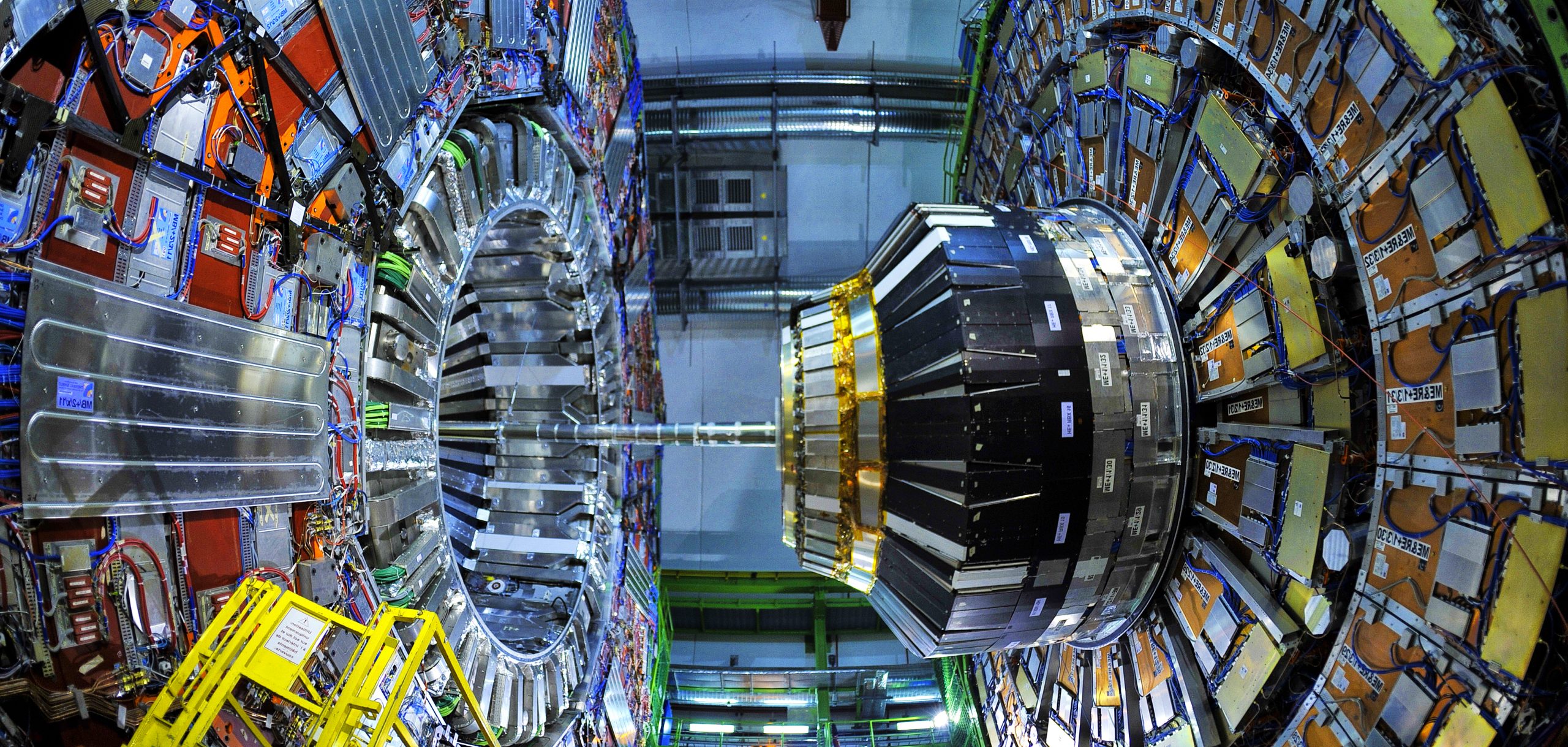
エネルギーフロンティアの研究者たちは、人類史上最高エネルギーまで粒子を加速し、それらを衝突させることで、物質の最も基本的な構成要素と宇宙の構造を生成・研究しています。彼らは、世界最大かつ最高エネルギーの粒子加速器である大型ハドロン衝突型加速器 (Large Hadron Collider, LHC)を用いて、ビッグバン後わずか10億分の1秒の宇宙を再現し、宇宙を構成する最小単位についての大発見を成し遂げています。
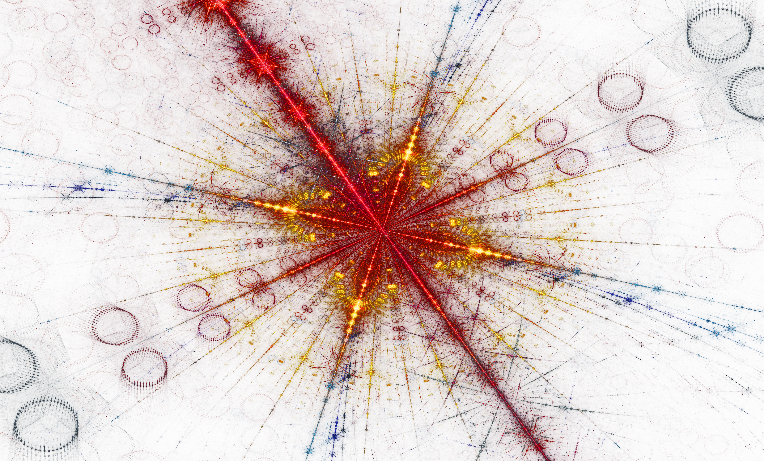
2012年7月、LHCのATLAS実験とCMS実験によるヒッグス粒子の発見は、1964年に François Englert氏、Peter Higgs氏らが標準模型の最後のピースとして提唱して以来、世界的に続けられてきた研究努力の集大成でした。
現在、ヒッグス粒子が発見されたことで、エネルギーフロンティアの研究者たちはこれを“新たな発見のためのツール”として活用しようとしています。ヒッグス粒子は標準模型の中核を担い、その予言の多くに影響を与えています。
ヒッグス粒子の性質を高精度に測定することで、その本質を明らかにし、標準模型を超える新たな物理の兆候が存在するかどうかを探ることが可能になります。
高エネルギー粒子衝突は、ブラックホール生成のメカニズムの探索、追加次元 (エクストラディメンション)の探索、その他のエキゾチックな現象の追究をも可能にします。
インテンシティフロンティア
インテンシティフロンティアの研究者たちは、高強度の粒子ビームと高感度検出器を組み合わせて、粒子の性質を極めて精密に測定し、標準模型が予測する最も稀な相互作用の研究や、新しい物理の探索を行っています。
既知の粒子を精密に測定することにより、標準模型という“道筋”が完全であるかどうかを検証できます (例えばBelle II実験では、クォークやレプトンの性質の精密測定、現在の宇宙における物質と反物質の非対称性の起源探索、新しい物質状態の発見などが目標とされています)。
インテンシティフロンティアの研究者たちは、自然界で非常に稀にしか起こらない過程を調べています。これには、基本粒子の特異な相互作用や、観測には膨大なデータを必要とする微細な効果などが含まれます。その例として、ニュートリノ物理の研究を目的とした長基線ニュートリノ施設 (LBNF)や地下深部ニュートリノ実験 (DUNE)があります。
また、インテンシティフロンティアの研究者たちは、粒子の性質を極めて高精度に測定し、標準模型が予測する最も稀な相互作用を調べることで、新粒子や新しい力の存在を示す手がかりを探し、未知の領域を切り開こうとしています。
標準模型では極めて低確率とされる粒子相互作用の一部は、新粒子や新しい力が存在する場合、大幅に増強される可能性があります。ある種の実験では、こうした特殊な相互作用を“1件でも”観測できれば、新しい物理の最初の兆候となり得ます。また別の実験では、基本粒子の性質を極めて精密に測定し、標準模型の予測からのわずかなずれを見いだすことで、新粒子の存在を示すアプローチがとられています。
さらに、ダークマターに関する一部のモデルでは、通常の物質と極めて弱く相互作用する“ダーク”粒子やダークフォースの存在が想定されています。これらのモデルは、高強度の粒子ビームや高性能かつ高レートの検出器を用いることで、コズミックフロンティアやエネルギーフロンティアの研究を補完する形で探索することができます。
コズミックフロンティア
コズミックフロンティアの研究者たちは、宇宙から飛来する粒子を利用して新しい現象を探究し、ダークマターやダークエネルギーの本質を明らかにしようとしています。
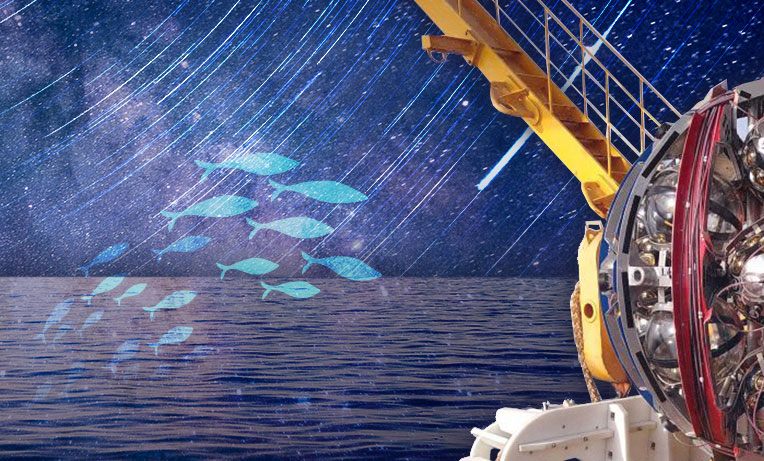
この研究では、宇宙空間に設置された観測装置、地上に設置された望遠鏡、地下深部の大型検出器など、多様なツールと技術を駆使し、ダークマターやダークエネルギー、その他の現象に関する根本的な物理の問いに迫ります。
また、宇宙線や超高エネルギーガンマ線といった地球外からの極高エネルギー粒子の観測を通じて、標準模型では説明されない新しい粒子や相互作用を探索します。
宇宙には、超大質量ブラックホール、超新星残骸、活動銀河核など、極限的な現象が発生し衝撃加速が生じる場所が存在します。これらの“宇宙加速器”と呼ばれる領域では、粒子が地上の加速器をはるかに超えるエネルギーまで加速されます。こうした粒子を研究することで、現在または将来の加速器では到達不可能なエネルギースケールを探索する手がかりが得られます。
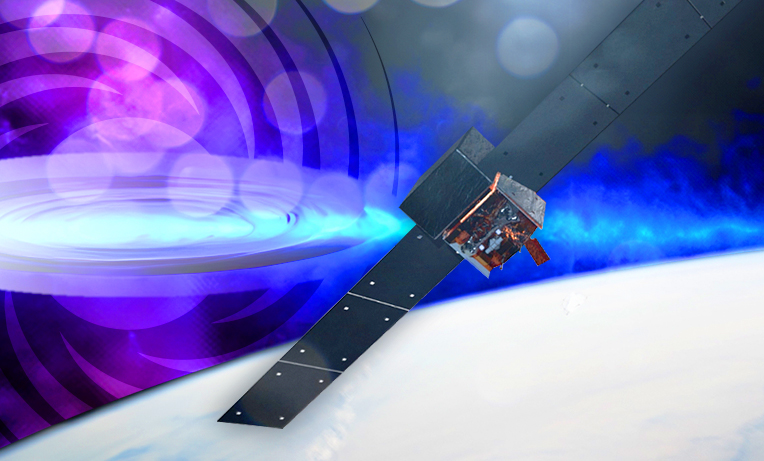
宇宙空間に設置された実験の例として、フェルミ・ガンマ線宇宙望遠鏡 (Fermi Gamma-ray Space Telescope)は、大面積望遠鏡 (LAT)とガンマ線バーストモニター (GBM)という2つの搭載機器を用いて、超高エネルギーガンマ線の起源を明らかにし、新しい物理の兆候を探索しています。
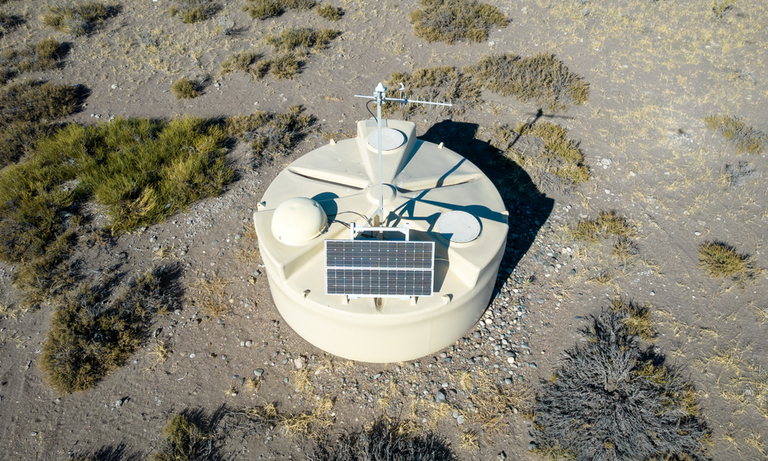
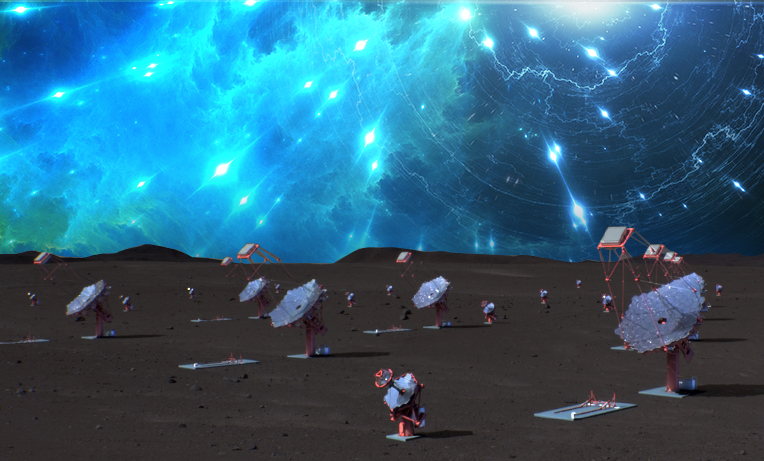
コズミックフロンティアにおける代表的な地上観測施設としては、ピエール・オージェ観測所 (Pierre Auger Observatory)が挙げられます。この施設では、宇宙から降り注ぐ最高エネルギーの宇宙線を観測し、それらの性質の理解を深めることを目的としています。
さらに、粒子物理の三つのフロンティアを補完する研究として、理論物理学・計算物理学、そして先端技術の研究開発は、HEPコミュニティにとって重要な位置を占めています。
理論物理学は、実験観測を説明するための枠組みを提供し、自然界のより深い理解へと導く役割を担っています。理論研究者は多様な実験結果の解釈を主導し、実験が向かうべき新しい方向性を提示することで現行の研究を支えています。また、膨大なデータを扱う実験の設計・運用・解析には、高度な計算技術が不可欠であり、これらは三つのフロンティアにおける発見研究を支える基盤となっています。
一方、先端技術の研究開発は、粒子加速、検出技術、計測機器などの基盤的研究を推進し、高エネルギー物理学および関連分野の科学的知識を前進させるための中核技術や新しい研究手法を生み出しています。

- Confirmation
-
It looks like you're in the . If this is not your location, please select the correct region or country below.
You're headed to Hamamatsu Photonics website for JP (Japanese). If you want to view an other country's site, the optimized information will be provided by selecting options below.
In order to use this website comfortably, we use cookies. For cookie details please see our cookie policy.
- Cookie Policy
-
This website or its third-party tools use cookies, which are necessary to its functioning and required to achieve the purposes illustrated in this cookie policy. By closing the cookie warning banner, scrolling the page, clicking a link or continuing to browse otherwise, you agree to the use of cookies.
Hamamatsu uses cookies in order to enhance your experience on our website and ensure that our website functions.
You can visit this page at any time to learn more about cookies, get the most up to date information on how we use cookies and manage your cookie settings. We will not use cookies for any purpose other than the ones stated, but please note that we reserve the right to update our cookies.
1. What are cookies?
For modern websites to work according to visitor’s expectations, they need to collect certain basic information about visitors. To do this, a site will create small text files which are placed on visitor’s devices (computer or mobile) - these files are known as cookies when you access a website. Cookies are used in order to make websites function and work efficiently. Cookies are uniquely assigned to each visitor and can only be read by a web server in the domain that issued the cookie to the visitor. Cookies cannot be used to run programs or deliver viruses to a visitor’s device.
Cookies do various jobs which make the visitor’s experience of the internet much smoother and more interactive. For instance, cookies are used to remember the visitor’s preferences on sites they visit often, to remember language preference and to help navigate between pages more efficiently. Much, though not all, of the data collected is anonymous, though some of it is designed to detect browsing patterns and approximate geographical location to improve the visitor experience.
Certain type of cookies may require the data subject’s consent before storing them on the computer.
2. What are the different types of cookies?
This website uses two types of cookies:
- First party cookies. For our website, the first party cookies are controlled and maintained by Hamamatsu. No other parties have access to these cookies.
- Third party cookies. These cookies are implemented by organizations outside Hamamatsu. We do not have access to the data in these cookies, but we use these cookies to improve the overall website experience.
3. How do we use cookies?
This website uses cookies for following purposes:
- Certain cookies are necessary for our website to function. These are strictly necessary cookies and are required to enable website access, support navigation or provide relevant content. These cookies direct you to the correct region or country, and support security and ecommerce. Strictly necessary cookies also enforce your privacy preferences. Without these strictly necessary cookies, much of our website will not function.
- Analytics cookies are used to track website usage. This data enables us to improve our website usability, performance and website administration. In our analytics cookies, we do not store any personal identifying information.
- Functionality cookies. These are used to recognize you when you return to our website. This enables us to personalize our content for you, greet you by name and remember your preferences (for example, your choice of language or region).
- These cookies record your visit to our website, the pages you have visited and the links you have followed. We will use this information to make our website and the advertising displayed on it more relevant to your interests. We may also share this information with third parties for this purpose.
Cookies help us help you. Through the use of cookies, we learn what is important to our visitors and we develop and enhance website content and functionality to support your experience. Much of our website can be accessed if cookies are disabled, however certain website functions may not work. And, we believe your current and future visits will be enhanced if cookies are enabled.
4. Which cookies do we use?
There are two ways to manage cookie preferences.
- You can set your cookie preferences on your device or in your browser.
- You can set your cookie preferences at the website level.
If you don’t want to receive cookies, you can modify your browser so that it notifies you when cookies are sent to it or you can refuse cookies altogether. You can also delete cookies that have already been set.
If you wish to restrict or block web browser cookies which are set on your device then you can do this through your browser settings; the Help function within your browser should tell you how. Alternatively, you may wish to visit www.aboutcookies.org, which contains comprehensive information on how to do this on a wide variety of desktop browsers.
5. What are Internet tags and how do we use them with cookies?
Occasionally, we may use internet tags (also known as action tags, single-pixel GIFs, clear GIFs, invisible GIFs and 1-by-1 GIFs) at this site and may deploy these tags/cookies through a third-party advertising partner or a web analytical service partner which may be located and store the respective information (including your IP-address) in a foreign country. These tags/cookies are placed on both online advertisements that bring users to this site and on different pages of this site. We use this technology to measure the visitors' responses to our sites and the effectiveness of our advertising campaigns (including how many times a page is opened and which information is consulted) as well as to evaluate your use of this website. The third-party partner or the web analytical service partner may be able to collect data about visitors to our and other sites because of these internet tags/cookies, may compose reports regarding the website’s activity for us and may provide further services which are related to the use of the website and the internet. They may provide such information to other parties if there is a legal requirement that they do so, or if they hire the other parties to process information on their behalf.
If you would like more information about web tags and cookies associated with on-line advertising or to opt-out of third-party collection of this information, please visit the Network Advertising Initiative website http://www.networkadvertising.org.
6. Analytics and Advertisement Cookies
We use third-party cookies (such as Google Analytics) to track visitors on our website, to get reports about how visitors use the website and to inform, optimize and serve ads based on someone's past visits to our website.
You may opt-out of Google Analytics cookies by the websites provided by Google:
https://tools.google.com/dlpage/gaoptout?hl=en
As provided in this Privacy Policy (Article 5), you can learn more about opt-out cookies by the website provided by Network Advertising Initiative:
http://www.networkadvertising.org
We inform you that in such case you will not be able to wholly use all functions of our website.
Close