
Home
Products
Physics research field

Type of experiment

Detector type
Behind the science
Tech in a nutshell
United Kingdom (EN)
Select your region or country.

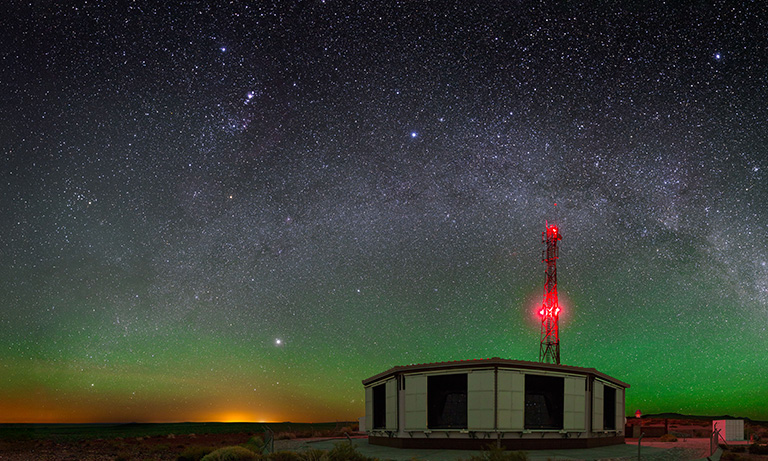
Pierre Auger Observatory: Listening to the universe's most powerful messengers
A question written in particles
Somewhere beyond our galaxy, particles head toward Earth with energies that dwarf anything achievable in a laboratory. These ultra-high-energy cosmic rays travel billions of light-years, yet they arrive so rarely, perhaps one per square kilometer per century, that catching them demands extraordinary patience and an extraordinary detector.
The Pierre Auger Observatory, spread across 3,000 square kilometers of the Argentine Pampa Amarilla, is that detector. Named after the French physicist who first recognized the phenomenon of cosmic-ray air showers, the Pierre Auger Observatory is the largest cosmic-ray observatory ever built. Its mission is to determine where these particles come from, what accelerates them to such extraordinary energies, and what they reveal about the universe's most violent processes.
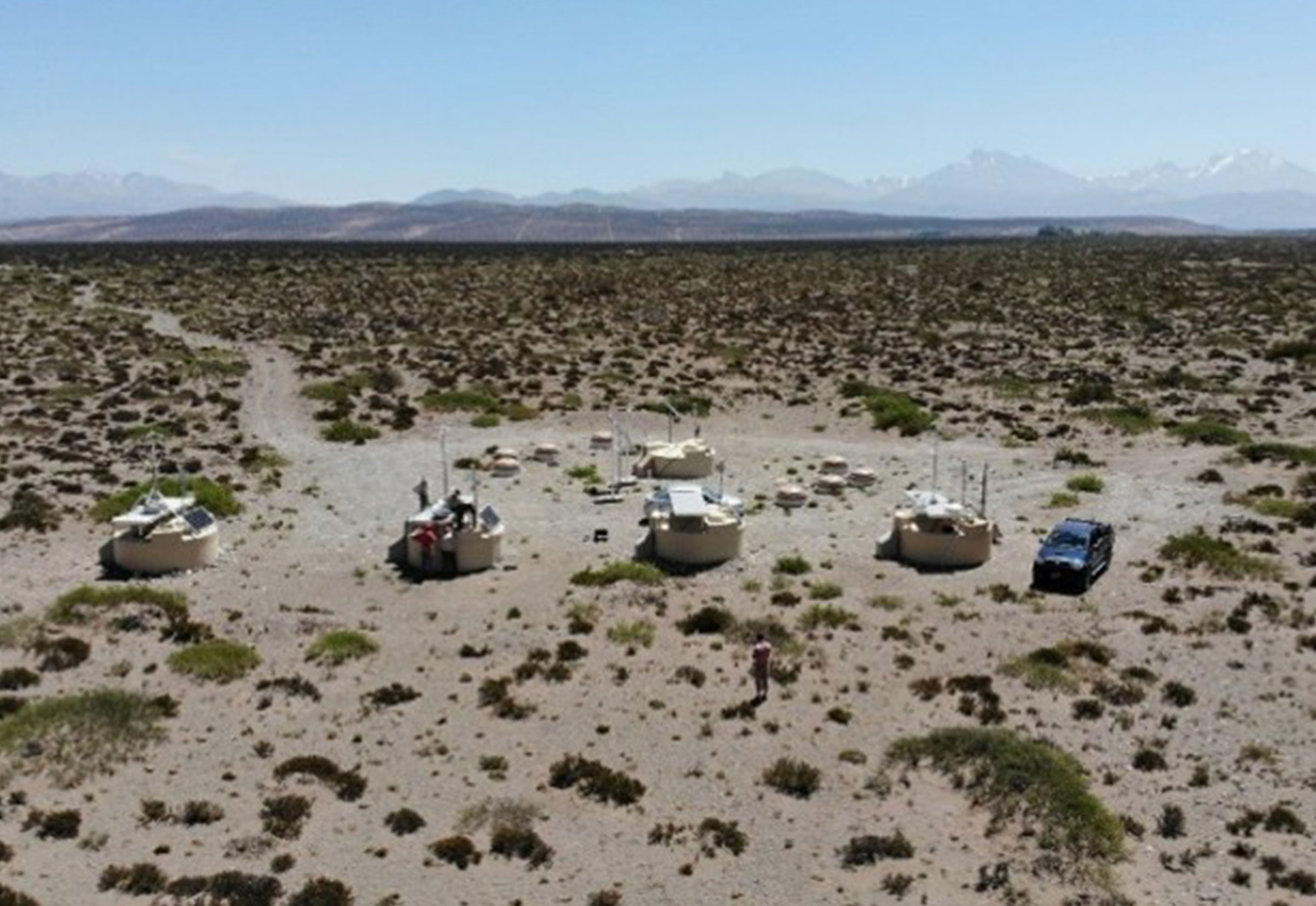
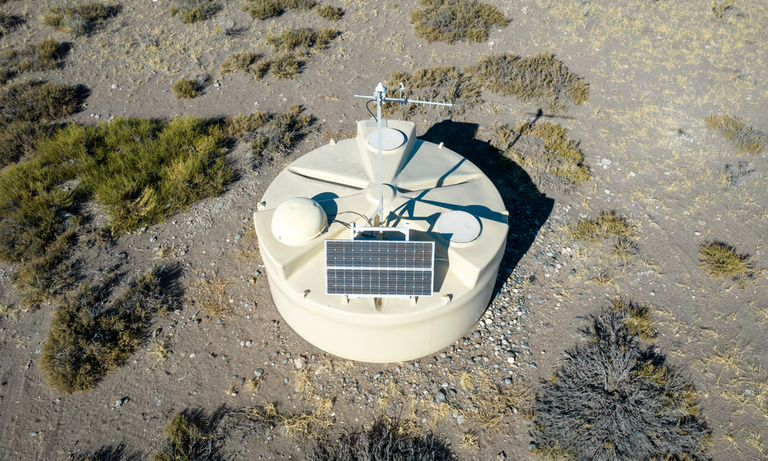
Surface Detector test array in the Pampa Amarilla.
Courtesy of Pierre Auger Observatory (CC BY‑SA 2.0).
Every time a cosmic ray strikes Earth's upper atmosphere, it triggers an air shower spanning kilometers, a cascade of billions of secondary particles that races toward the ground at nearly the speed of light. The Auger Observatory was built to catch those cascades in their entirety, and in doing so, to decode the messenger that caused it.
As spectacular as these air showers are, capturing them requires an instrument capable of watching both the sky and the ground at once. That challenge shaped the design of the Pierre Auger Observatory’s hybrid detection system.
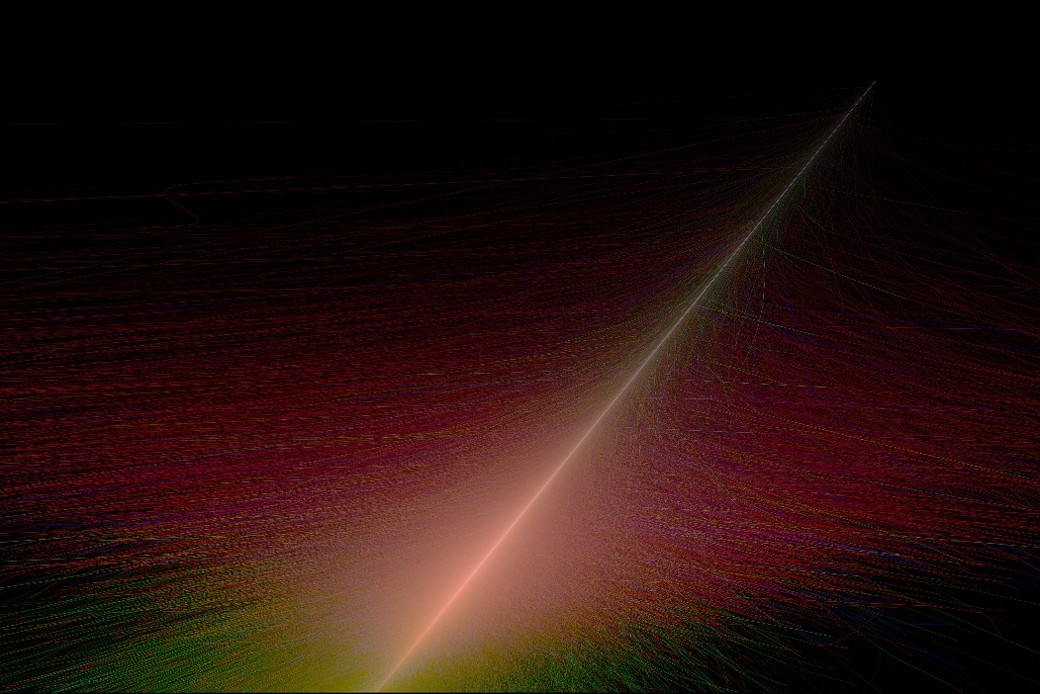
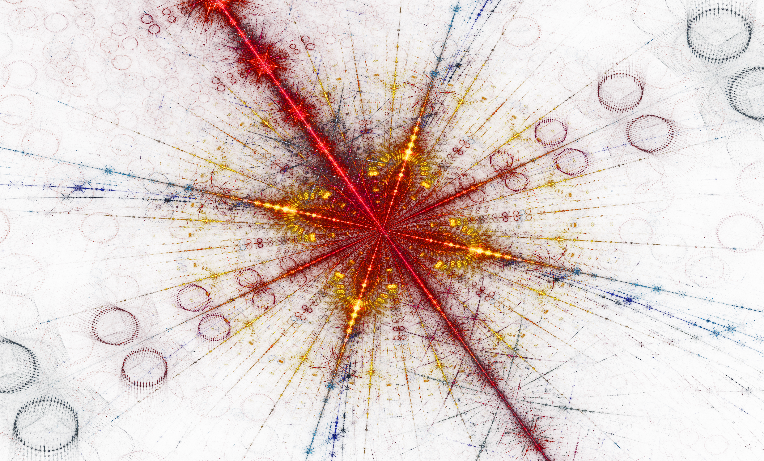
Simulated cascade of secondary particles from an ultra‑high‑energy cosmic ray entering the atmosphere. Courtesy of Steven Saffi / Pierre Auger Collaboration (CC BY‑SA 2.0).
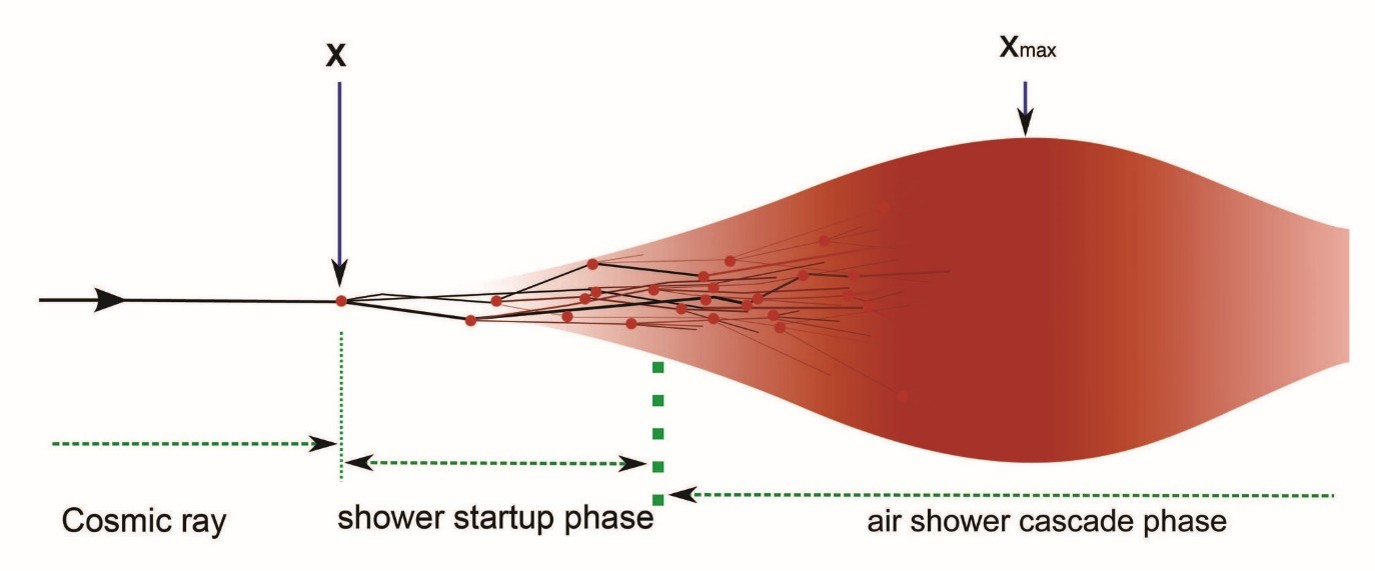
From cosmic ray to air shower. Courtesy of Pierre Auger Observatory (CC BY‑SA 2.0).
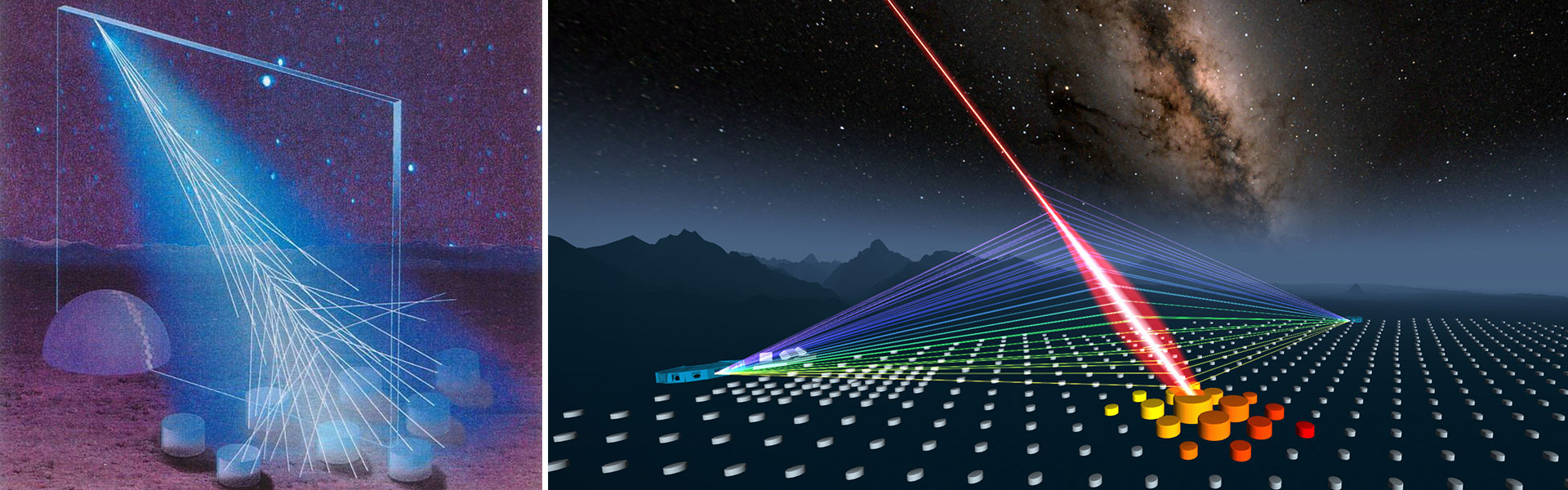
Air shower detection principle. Courtesy of Pierre Auger Observatory (CC BY‑SA 2.0).
Engineered to last
These fleeting showers are detected using two complementary observation techniques. Across the plains are dotted 1,660 water-Cherenkov detector tanks filled with ultra-pure water and watched over by three photomultiplier tubes (PMTs). They record the secondary particles as they reach ground level. On clear nights with low moon illumination, 27 fluorescence telescopes watch the horizon, capturing the faint ultraviolet glow the shower leaves in the atmosphere as it descends. Together, this hybrid system can reconstruct the energy, direction, and composition of the original particle with a precision that neither technique could achieve alone.
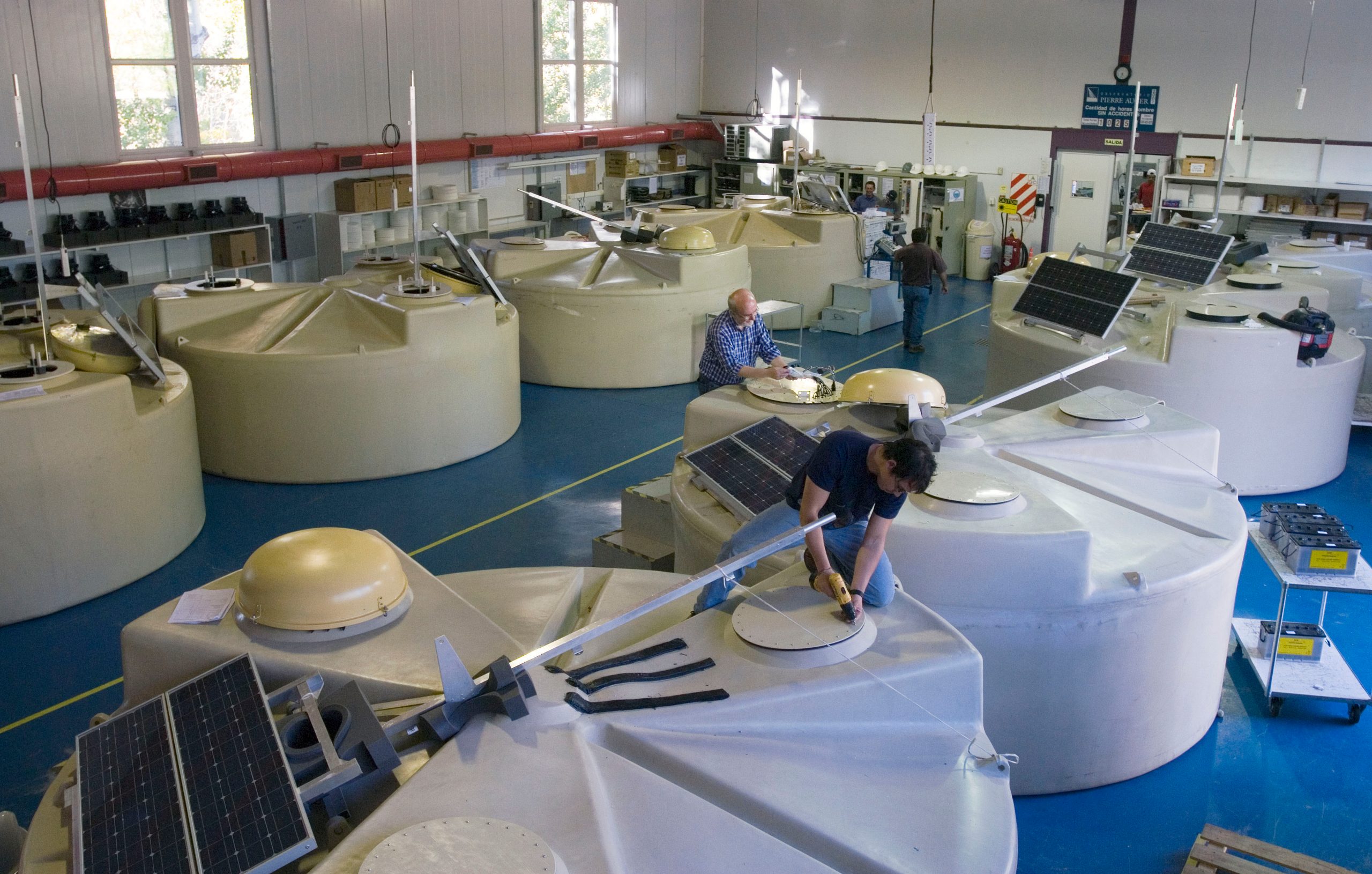
Work on a plastic surface-detector tank. Courtesy of Pierre Auger Observatory (CC BY SA 2.0).
The demands placed on the PMTs at the heart of each tank are severe. Exposed to the heat and cold of the Pampa, and the humidity in the tank, they must function reliably and continuously for up to 30 years. Dr. Bianca Keilhauer of the Karlsruhe Institute of Technology describes the challenge plainly: "We needed reliability, as they needed to run for 30 years, really 24 hours most of the time."
As the original array matured, the need to extend its capabilities while preserving long‑term reliability became clear. This need led to the development of AugerPrime.
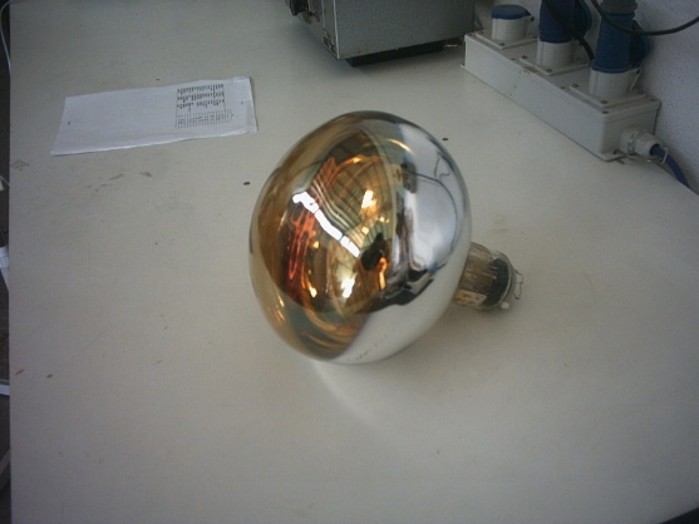
Photomultiplier tube used in a Surface Detector tank.
Courtesy of Pierre Auger Observatory (CC BY‑SA 2.0).
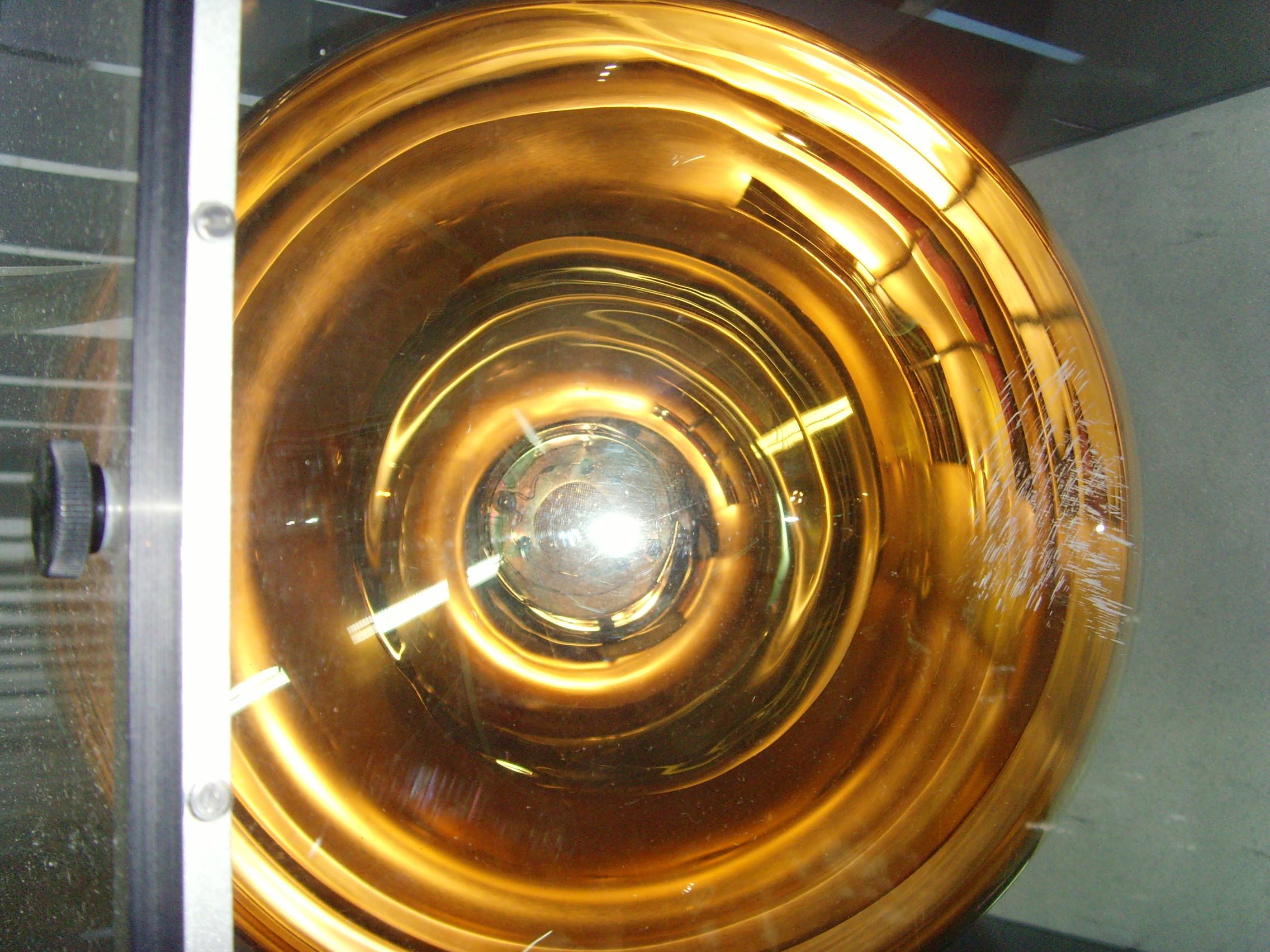
Photomultiplier tube used in a Surface Detector tank.
Courtesy of Pierre Auger Observatory (CC BY‑SA 2.0).
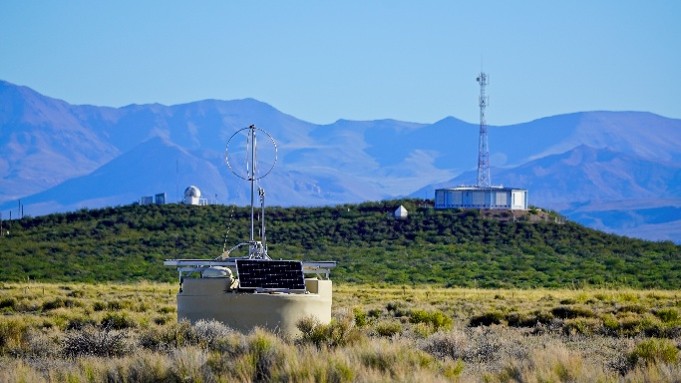
Surface Detector with the Fluorescence Detector building at Los Leones.
Courtesy of Tobias Schulz, Pierre Auger Observatory (CC BY‑SA 2.0).
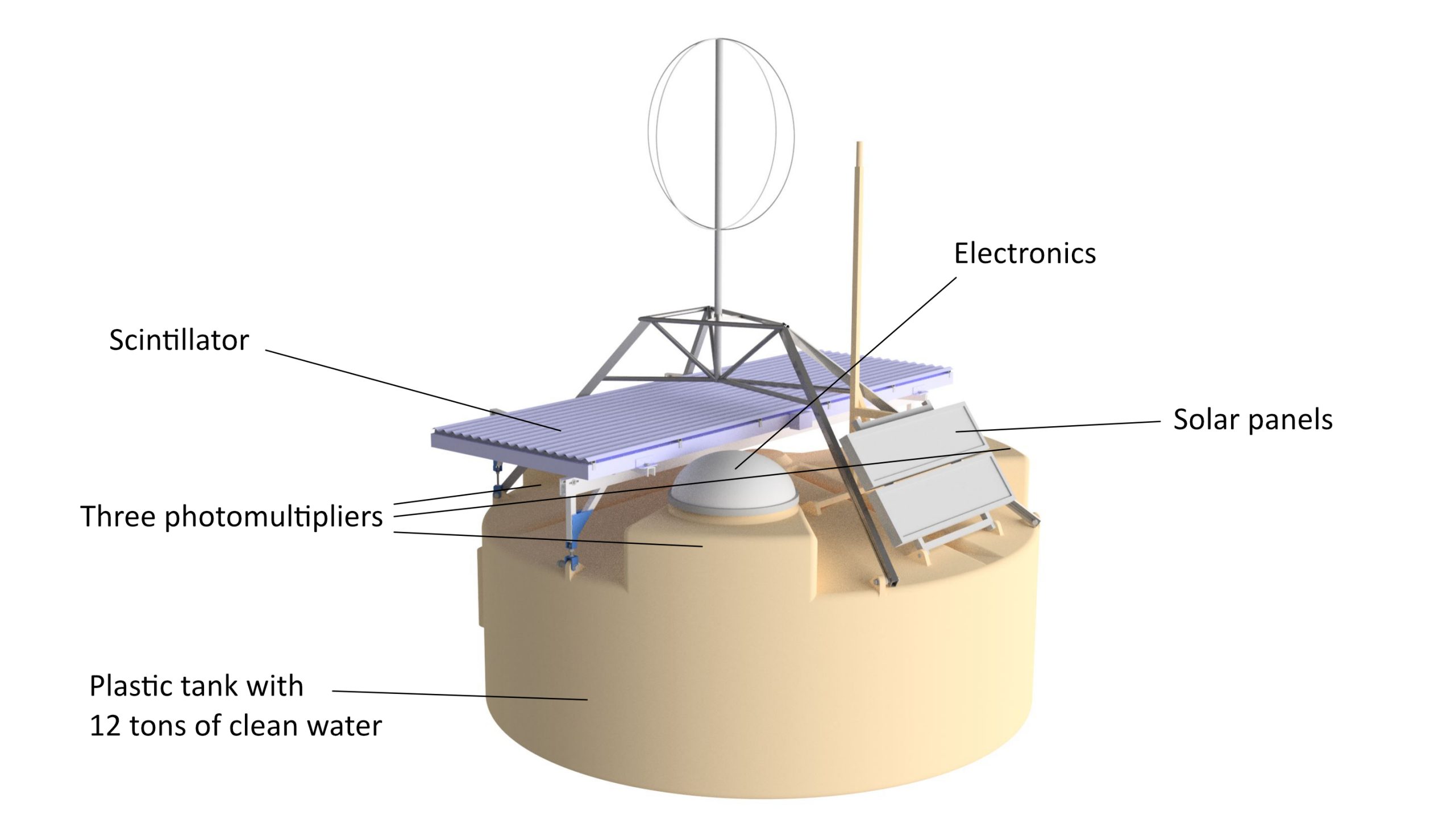
Surface Detector details. Courtesy of Pierre Auger Observatory (CC BY‑SA 2.0).
A partnership grounded in reliability
AugerPrime expands the Observatory’s capabilities by adding scintillator surface detectors atop the existing tanks and deploying underground muon counters as part of the Underground Muon Detector (UMD) array. These upgrades use PMT and SiPM detectors to help scientists separate the electromagnetic and muonic components of each shower, marking a crucial step toward identifying the mass of the original cosmic ray and, ultimately, its source.
For AugerPrime, the challenge was not only scientific but operational: improving the Observatory’s capabilities while keeping a vast detector network reliable in the field. The upgraded system had to integrate new scintillator detectors, muon counters, PMTs, SiPMs, and electronics across about 1,600 surface detector stations, with each component produced, calibrated, tested, shipped, and installed to consistent standards. As the original detectors aged and the upgraded array came together as one instrument, AugerPrime became both a technical achievement and a long-term commitment to keeping one of the world’s most important cosmic ray observatories running into the next decade.
Meeting those upgrade requirements brought the Observatory to Hamamatsu Photonics. Producing PMTs that could operate reliably for decades, in several hundreds of units and to tightly controlled specifications, called for close collaboration. Hamamatsu Photonics provided the PMTs for the upgraded array, working with the Observatory to ensure that laboratory performance translated reliably to field conditions.
“Their commitment to addressing our needs has made a meaningful difference,” Dr. Bianca Keilhauer explains.
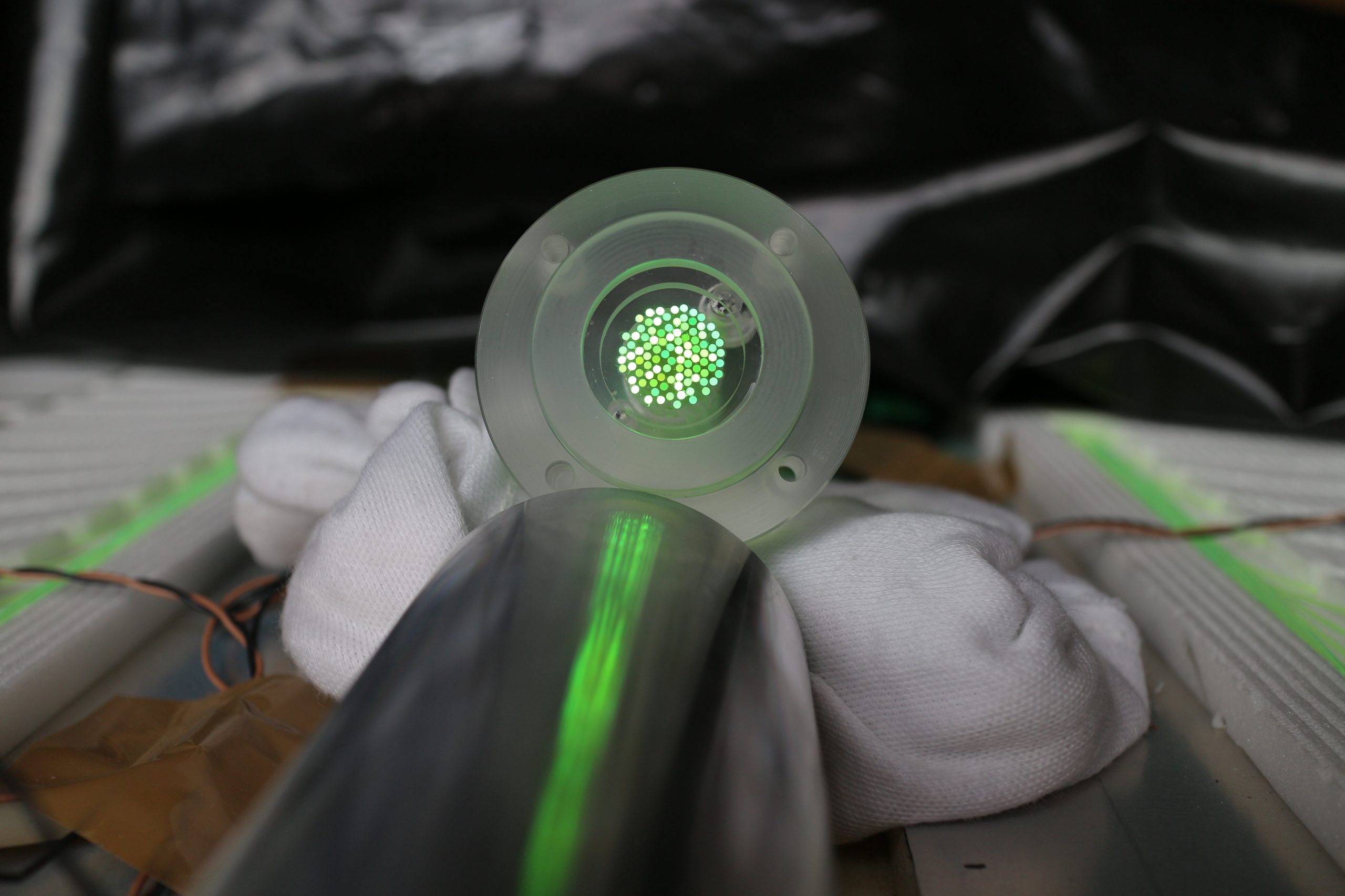
AugerPrime scintillator surface detector – inspection of the optics in the laboratory.
Courtesy of Pierre Auger Observatory (CC BY‑SA 2.0).
Surprising discoveries
Two decades of continuous data have transformed our understanding of cosmic rays. The Pierre Auger Observatory has provided strong evidence that the most energetic particles striking Earth originate from beyond our own galaxy [1], a discovery that answers one of the oldest questions in high-energy astrophysics, while opening a new frontier of questions about what kinds of objects could accelerate matter to such extremes.
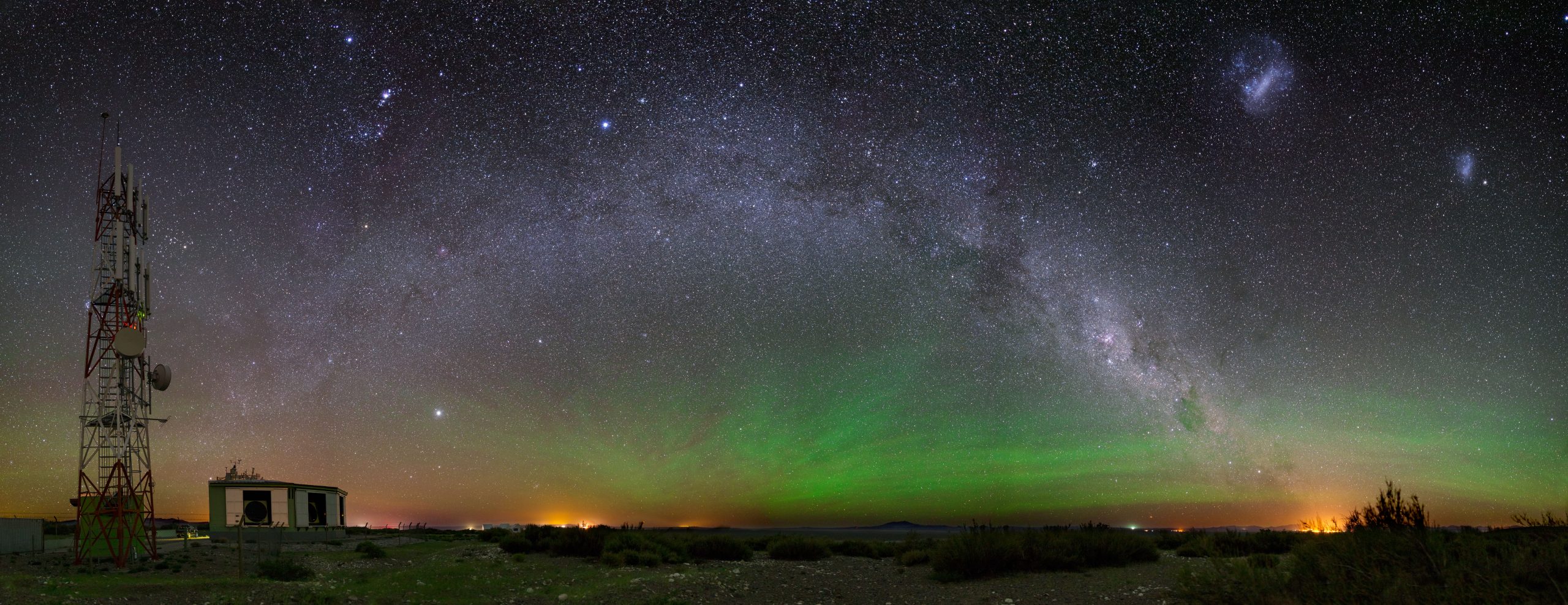
Fluorescence Detector at Coihueco under clear night conditions. Image credit: Steven Saffi / Pierre Auger Observatory (CC BY‑SA 2.0).
Yet the data have also raised new questions. Measurements from the Observatory suggest that ultra-high-energy cosmic rays do not behave exactly as existing models predicted, particularly when it comes to their composition and arrival directions. These findings continue to challenge theoretical models and guide new investigations into where these particles come from, how they travel through space, and what happens when they reach Earth’s atmosphere.
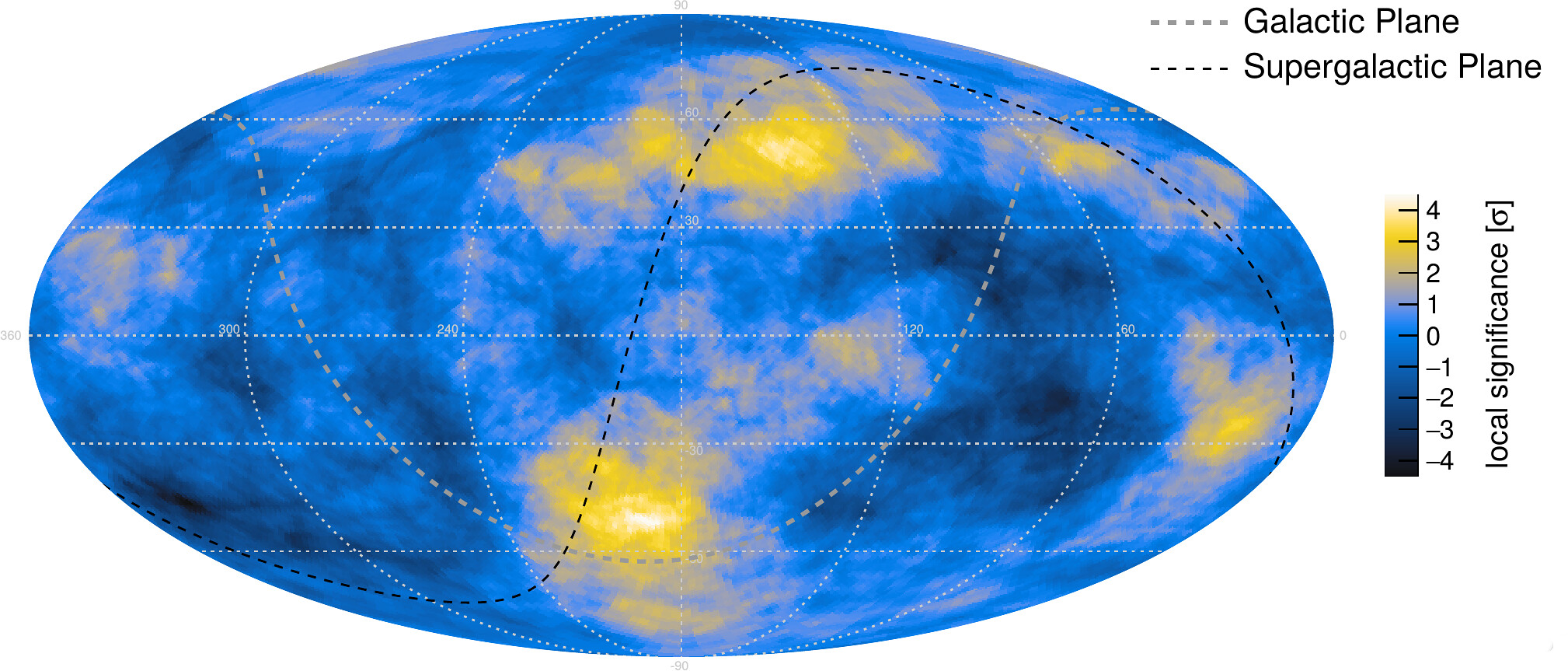
Sky map, in equatorial coordinates, showing local over- and under-densities of UHECRs above 47 ± 7 EeV, expressed in standard deviations [2,3].
Connecting research with society
The Observatory has also become part of life in Malargüe, the small Argentine city at the heart of its community. International researchers and more than two decades of collaboration have woven the Pierre Auger Observatory into the fabric of local life, reminding us that the pursuit of cosmic mysteries, however remote the subject may seem, is always a deeply human endeavor.
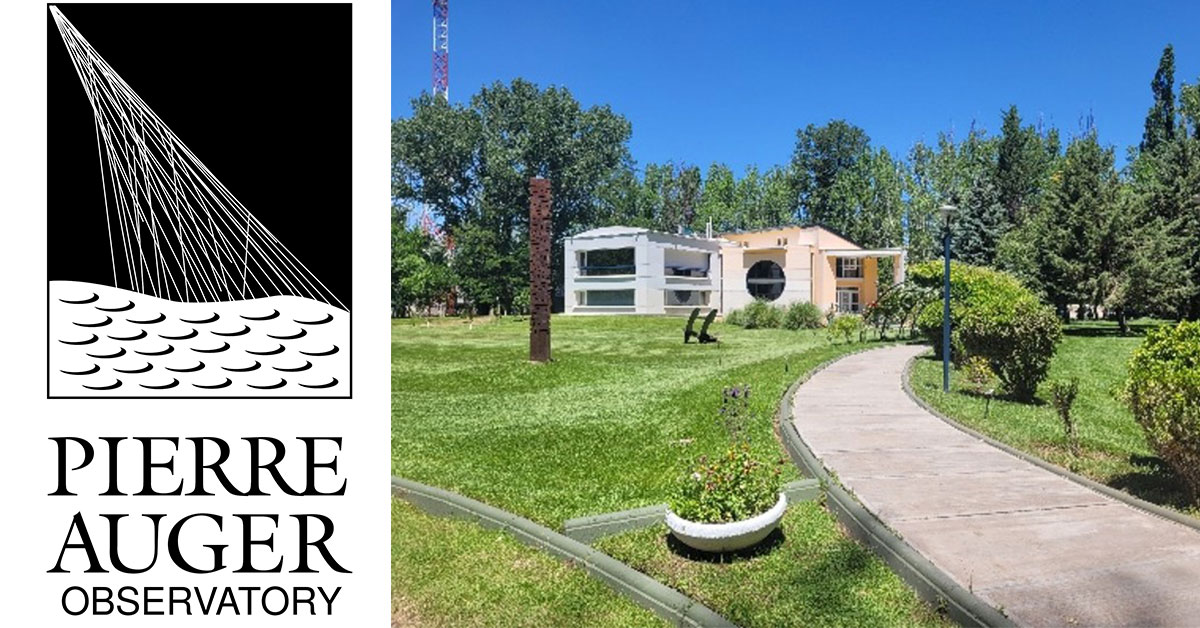
Observatory control building in Malargüe. Courtesy of Pierre Auger Observatory (CC BY‑SA 2.0).
The work continues. New detectors are being deployed, aging components replaced, and partnerships with other major experiments strengthened. Each upgrade is a step closer to answering the questions that first drew scientists to this remote corner of South America: where the universe's most powerful accelerators hide, and what they are doing to the fabric of space around them.
References
[1] The Pierre Auger Collaboration, “Observation of a large-scale anisotropy in the arrival directions of cosmic rays above 8 × 10¹⁸ eV,” Science, Sep. 22, 2017, doi: 10.1126/science.aan4338
[2] F. Sarazin et al., “What is the nature and origin of the highest-energy particles in the universe?,” arXiv:1903.04063, 2019, doi: 10.48550/arXiv.1903.04063
[3] J. Biteau et al. [Pierre Auger and Telescope Array Collaborations], “Covering the celestial sphere at ultra-high energies: Full-sky cosmic-ray maps beyond the ankle and the flux suppression,” in Proc. Ultra High Energy Cosmic Rays 2018, 2018.
- Confirmation
-
It looks like you're in the . If this is not your location, please select the correct region or country below.
You're headed to Hamamatsu Photonics website for GB (English). If you want to view an other country's site, the optimized information will be provided by selecting options below.
In order to use this website comfortably, we use cookies. For cookie details please see our cookie policy.
- Cookie Policy
-
This website or its third-party tools use cookies, which are necessary to its functioning and required to achieve the purposes illustrated in this cookie policy. By closing the cookie warning banner, scrolling the page, clicking a link or continuing to browse otherwise, you agree to the use of cookies.
Hamamatsu uses cookies in order to enhance your experience on our website and ensure that our website functions.
You can visit this page at any time to learn more about cookies, get the most up to date information on how we use cookies and manage your cookie settings. We will not use cookies for any purpose other than the ones stated, but please note that we reserve the right to update our cookies.
1. What are cookies?
For modern websites to work according to visitor’s expectations, they need to collect certain basic information about visitors. To do this, a site will create small text files which are placed on visitor’s devices (computer or mobile) - these files are known as cookies when you access a website. Cookies are used in order to make websites function and work efficiently. Cookies are uniquely assigned to each visitor and can only be read by a web server in the domain that issued the cookie to the visitor. Cookies cannot be used to run programs or deliver viruses to a visitor’s device.
Cookies do various jobs which make the visitor’s experience of the internet much smoother and more interactive. For instance, cookies are used to remember the visitor’s preferences on sites they visit often, to remember language preference and to help navigate between pages more efficiently. Much, though not all, of the data collected is anonymous, though some of it is designed to detect browsing patterns and approximate geographical location to improve the visitor experience.
Certain type of cookies may require the data subject’s consent before storing them on the computer.
2. What are the different types of cookies?
This website uses two types of cookies:
- First party cookies. For our website, the first party cookies are controlled and maintained by Hamamatsu. No other parties have access to these cookies.
- Third party cookies. These cookies are implemented by organizations outside Hamamatsu. We do not have access to the data in these cookies, but we use these cookies to improve the overall website experience.
3. How do we use cookies?
This website uses cookies for following purposes:
- Certain cookies are necessary for our website to function. These are strictly necessary cookies and are required to enable website access, support navigation or provide relevant content. These cookies direct you to the correct region or country, and support security and ecommerce. Strictly necessary cookies also enforce your privacy preferences. Without these strictly necessary cookies, much of our website will not function.
- Analytics cookies are used to track website usage. This data enables us to improve our website usability, performance and website administration. In our analytics cookies, we do not store any personal identifying information.
- Functionality cookies. These are used to recognize you when you return to our website. This enables us to personalize our content for you, greet you by name and remember your preferences (for example, your choice of language or region).
- These cookies record your visit to our website, the pages you have visited and the links you have followed. We will use this information to make our website and the advertising displayed on it more relevant to your interests. We may also share this information with third parties for this purpose.
Cookies help us help you. Through the use of cookies, we learn what is important to our visitors and we develop and enhance website content and functionality to support your experience. Much of our website can be accessed if cookies are disabled, however certain website functions may not work. And, we believe your current and future visits will be enhanced if cookies are enabled.
4. Which cookies do we use?
There are two ways to manage cookie preferences.
- You can set your cookie preferences on your device or in your browser.
- You can set your cookie preferences at the website level.
If you don’t want to receive cookies, you can modify your browser so that it notifies you when cookies are sent to it or you can refuse cookies altogether. You can also delete cookies that have already been set.
If you wish to restrict or block web browser cookies which are set on your device then you can do this through your browser settings; the Help function within your browser should tell you how. Alternatively, you may wish to visit www.aboutcookies.org, which contains comprehensive information on how to do this on a wide variety of desktop browsers.
5. What are Internet tags and how do we use them with cookies?
Occasionally, we may use internet tags (also known as action tags, single-pixel GIFs, clear GIFs, invisible GIFs and 1-by-1 GIFs) at this site and may deploy these tags/cookies through a third-party advertising partner or a web analytical service partner which may be located and store the respective information (including your IP-address) in a foreign country. These tags/cookies are placed on both online advertisements that bring users to this site and on different pages of this site. We use this technology to measure the visitors' responses to our sites and the effectiveness of our advertising campaigns (including how many times a page is opened and which information is consulted) as well as to evaluate your use of this website. The third-party partner or the web analytical service partner may be able to collect data about visitors to our and other sites because of these internet tags/cookies, may compose reports regarding the website’s activity for us and may provide further services which are related to the use of the website and the internet. They may provide such information to other parties if there is a legal requirement that they do so, or if they hire the other parties to process information on their behalf.
If you would like more information about web tags and cookies associated with on-line advertising or to opt-out of third-party collection of this information, please visit the Network Advertising Initiative website http://www.networkadvertising.org.
6. Analytics and Advertisement Cookies
We use third-party cookies (such as Google Analytics) to track visitors on our website, to get reports about how visitors use the website and to inform, optimize and serve ads based on someone's past visits to our website.
You may opt-out of Google Analytics cookies by the websites provided by Google:
https://tools.google.com/dlpage/gaoptout?hl=en
As provided in this Privacy Policy (Article 5), you can learn more about opt-out cookies by the website provided by Network Advertising Initiative:
http://www.networkadvertising.org
We inform you that in such case you will not be able to wholly use all functions of our website.
Close