
Home
Products
Physics research field



Type of experiment


Detector type
Behind the science
Tech in a nutshell
United Kingdom (EN)
Select your region or country.

LHCb Scintillating Fiber Tracker: Unmatched measurement capabilities
Tracking discoveries in particle physics
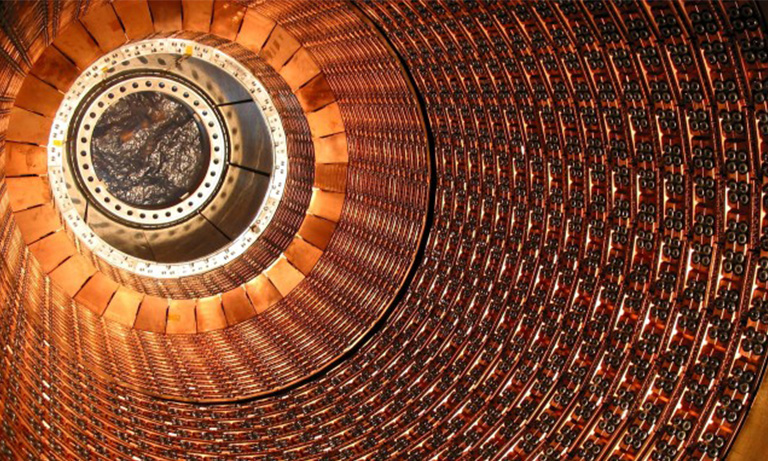
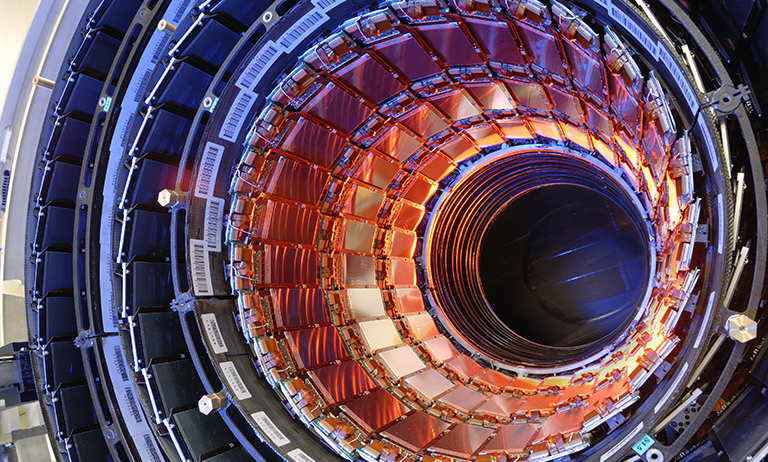
Deep beneath the surface of the Earth, in a cavernous space 100 meters underground, lies the LHCb Scintillating Fiber Tracker (‘SciFi Tracker’), a groundbreaking innovation in measurement developed at CERN. This sub-detector, part of the Large Hadron Collider beauty (LHCb) experiment, aims to address critical questions surrounding CP-symmetry breaking and dark matter, significantly advancing our understanding of particle physics.

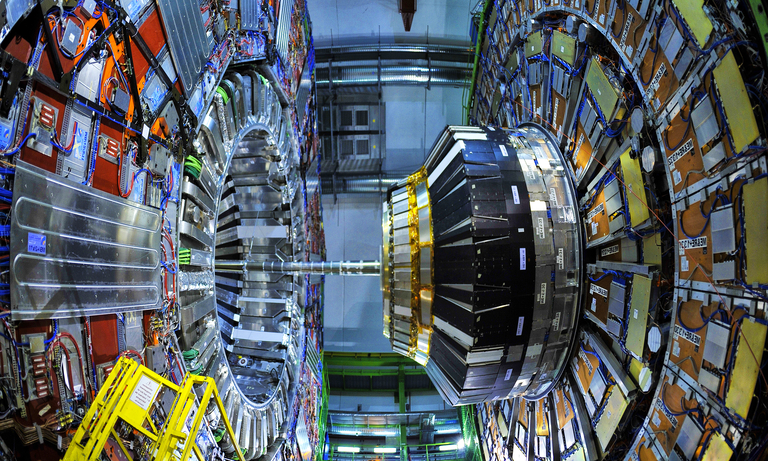
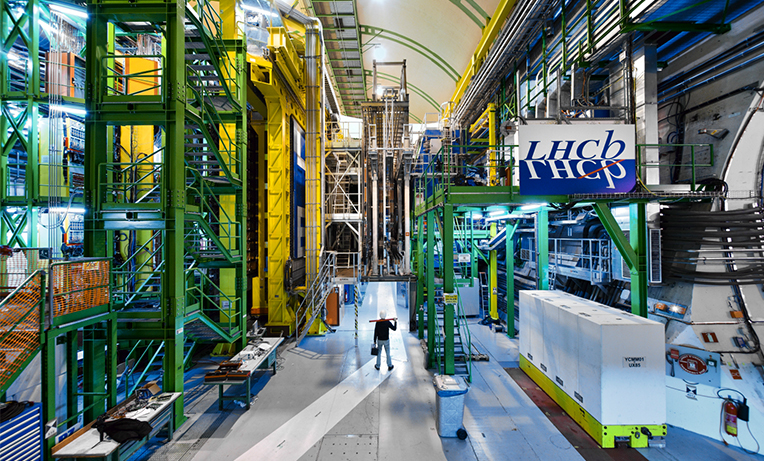
Opening of the LHCb detector in early December 2018.
Credit: Maximilien Brice/CERN
Charting new frontiers
The SciFi Tracker plays a pivotal role in the LHCb experiment. It uses scintillating fibers to accurately track particles generated from collisions, providing high spatial resolution. This technology is essential for measuring rare phenomena, particularly in the beauty and charm quark sectors, and assists in the search for evidence of new physics beyond the Standard Model. Its implementation highlights the necessity of technological advancements in measurement and recording within the evolving landscape of particle physics.
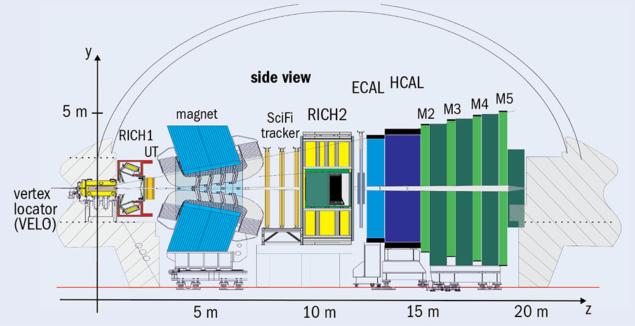
A cross-section showing the LHCb detector’s main elements. Credit: LHCb
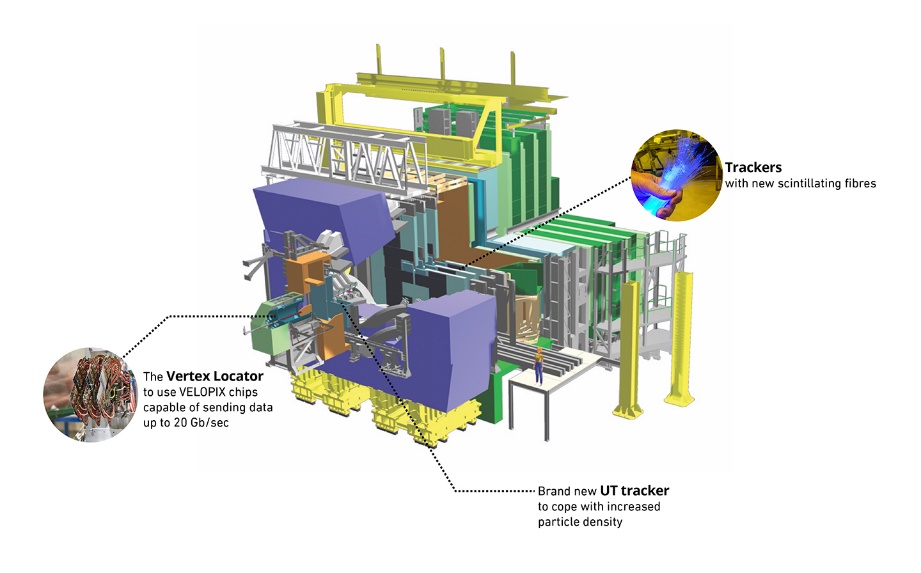
A cross-section showing the LHCb detector’s main elements. Credit: LHCb
Advancing particle detection technology
The successful implementation of the SciFi Tracker marked a major milestone in advancing LHCb’s overall abilities. Replacing both the previous ‘Outer Tracker’ gas detector and the ‘Inner Tracker’ of silicon microstrips, the single SciFi Tracker enhances the experiment's ability to track high-energy particles with exceptional precision. By employing organic scintillator fibers, this novel design creates a thinner and more efficient system optimized for high-performance tracking. Covering an area of 340 m², it can measure particle passage with 70 μm precision and process 40 million interactions per second, achieving a hit efficiency of over 99 percent. The detector is capable of handling higher luminosity and data rates than the original detectors.
The installation of the SciFi Tracker during LHCb’s Upgrade I in 2021 was a momentous occasion for Dr. Guido Haefeli, the Technical Coordinator for the project. Involved from concept to implementation, “seeing the fully built sci-fi tracker hanging in the air, represented the culmination of 10 years of work and collaboration”.
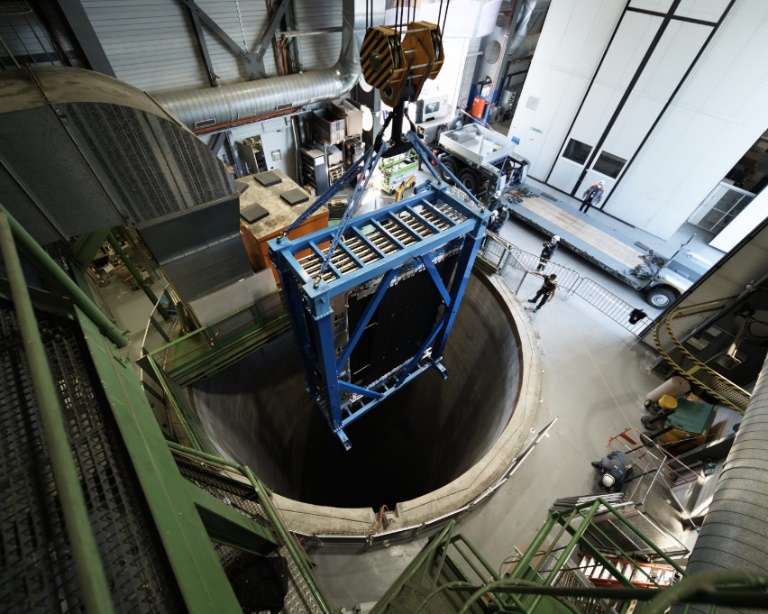
Lowering the first four of the 12 pieces that make up the SciFi detector 100 metres underground. Credit: CERN
Addressing the radiation challenge
Radiation poses the main challenge for the SciFi Tracker, as it risks damaging the vital photodetectors within the intense LHC radiation environment. Both silicon and scintillator materials are vulnerable to degradation, necessitating the tracker’s operation at low temperatures of -40°C to mitigate radiation damage while preserving efficiency. This strategic approach was instrumental in maintaining the flawless operation of 4,096 multichannel detector arrays over the past three years, setting the stage for future developments.
Looking ahead, the upcoming Upgrade II "Mighty SciFi", scheduled for 2035, aims to further its radiation hardness and cool the detector to a remarkable -196 °C using liquid nitrogen, eliminating radiation-induced noise. It will also increase interaction rate sixfold while handling denser tracks and adding the time resolution to under one nanosecond.
Collaborative efforts
The partnership with Hamamatsu Photonics has been crucial in overcoming the challenges faced by the SciFi Tracker. As a trusted contributor within the particle physics community, Hamamatsu's expertise in silicon photomultipliers (SiPM) facilitated the development of specialized MPPC® arrays tailored for the project. These innovative butt-joined devices, featuring minimal dead areas and thin entrance windows, offer improved data collection. Introduced in 2017, they are the most radiation hard SiPM technology while providing the large-scale production required for the project's ambitious nature.
“The end product is a fantastic device, its performance excellent”. Dr. Haefeli continues, “Our strong relationship with Hamamatsu’s customer support and their support and collaboration over the years has been key to the success of the experiment.”
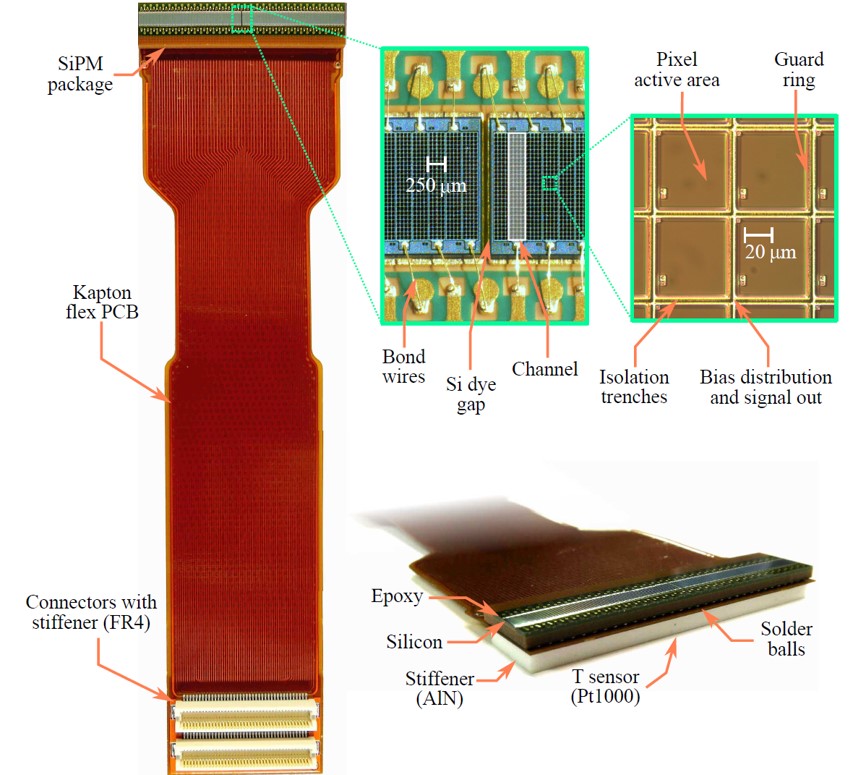
LHCb SciFi Tracker Silicon Photomultipliers (SIPMs). Each LHCb’s SiPM channel comprises 104 parallel Avalanche Photodiodes in Geiger Mode pixels. The 128 channel array is made of 2 dies of 64 channels and is mounted on a Kapton flex PCB. The LHCb Scifi uses 4096 SiPM assemblies with a total of 524288 SiPM channels. Credit: Guido Haefeli, EPFL on behalf of the LHCb SciFi.
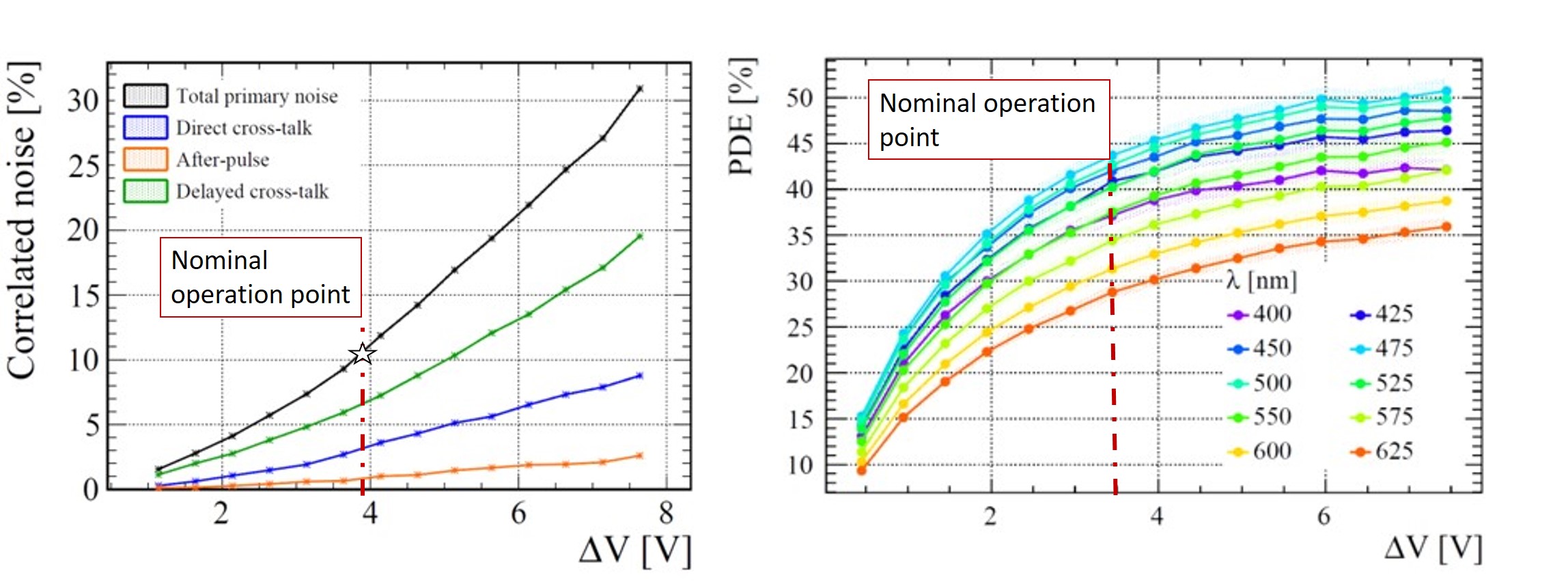
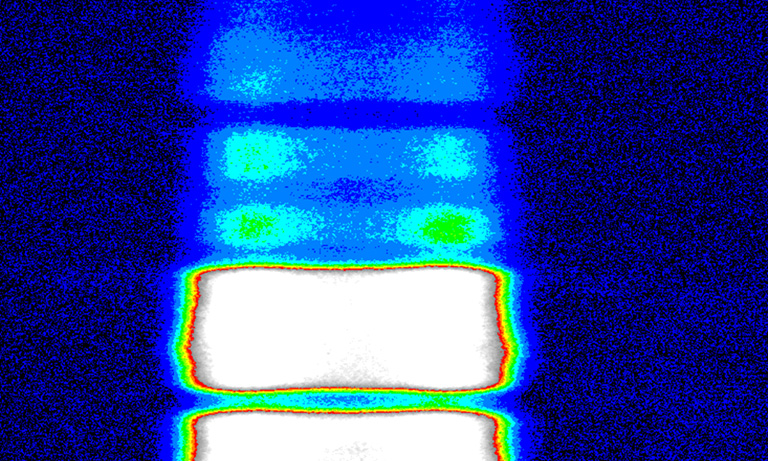
The SiPMs key performances, correlated noise and PDE. Credit: Guido Haefeli, EPFL, on behalf of the LHCb SciFi.
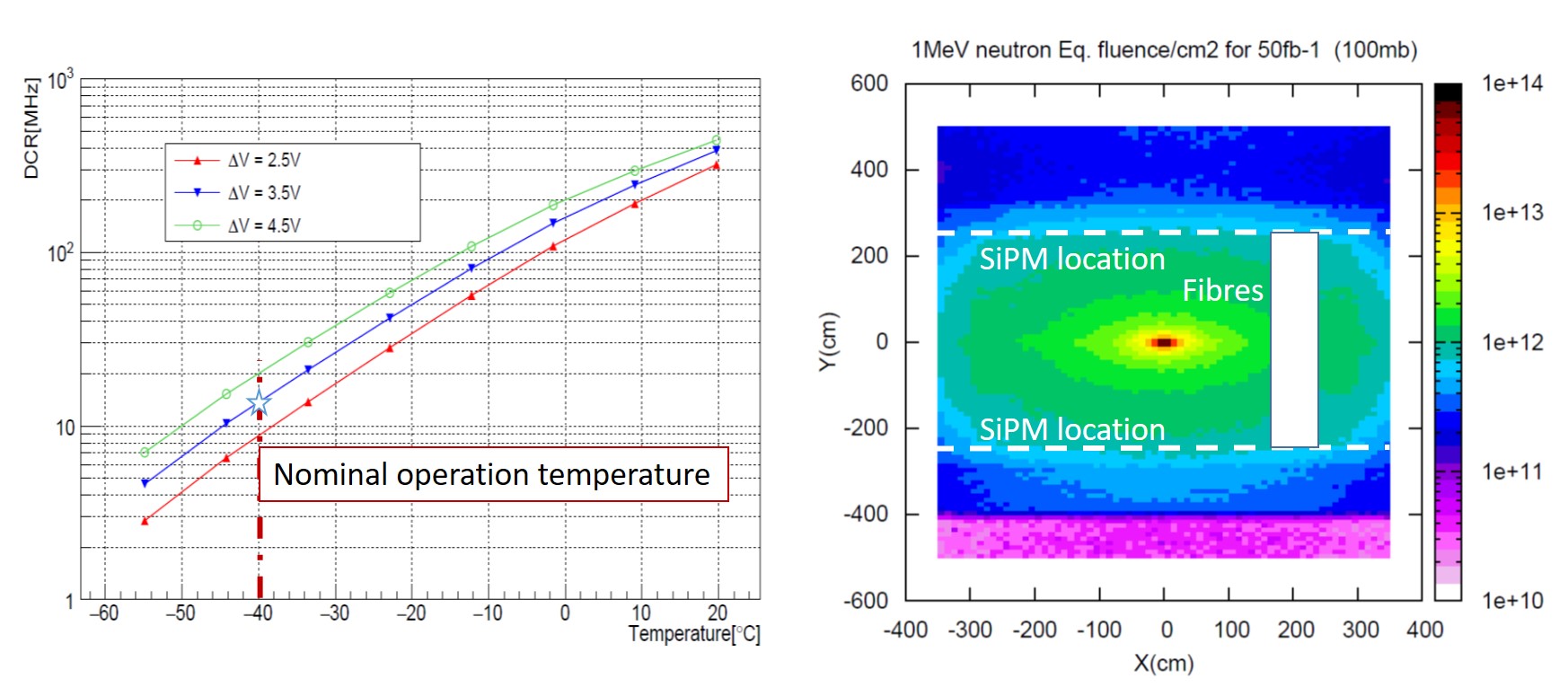
SiPMs performance: Dark count rate per SiPM channel (DCR) and the radiation environment in the SciFi detector region. Credit: Guido Haefeli, EPFL, on behalf of the LHCb SciFi
Future prospects
The technology behind the SciFi Tracker has promising implications, not only in high-energy physics but also in other fields. While its results continue to challenge our understanding of the Standard Model and search for new physics, the organic scintillator fibers also have the potential to transform industries further afield. It could replace traditional silicon detectors in various applications, including medical uses like ion beam monitoring and radiotherapy dose monitoring. The advancements driven by the SciFi Tracker and the LHCb experiment are set to enrich our lives beyond the realm of particle physics.

Image for illustration purposes.
Exciting discoveries
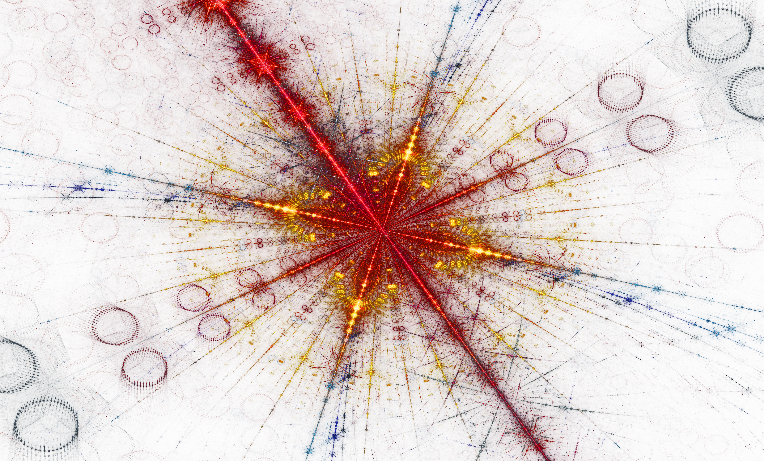
The ongoing research with the SciFi Tracker is already yielding new insights into the behavior of baryonic matter and antimatter. It provides strong evidence that baryons, such as protons and neutrons, exhibit a mirror-like asymmetry in fundamental laws, leading to distinct interactions between matter and antimatter. This could help explain the dominance of matter over antimatter after the Big Bang.
As scientists look deeper into these phenomena, the possibilities for groundbreaking discoveries in fundamental physics remain vast. The SciFi Tracker exemplifies both an evolution in experimental techniques and a collective commitment to exploring the unknown for the benefit of all.
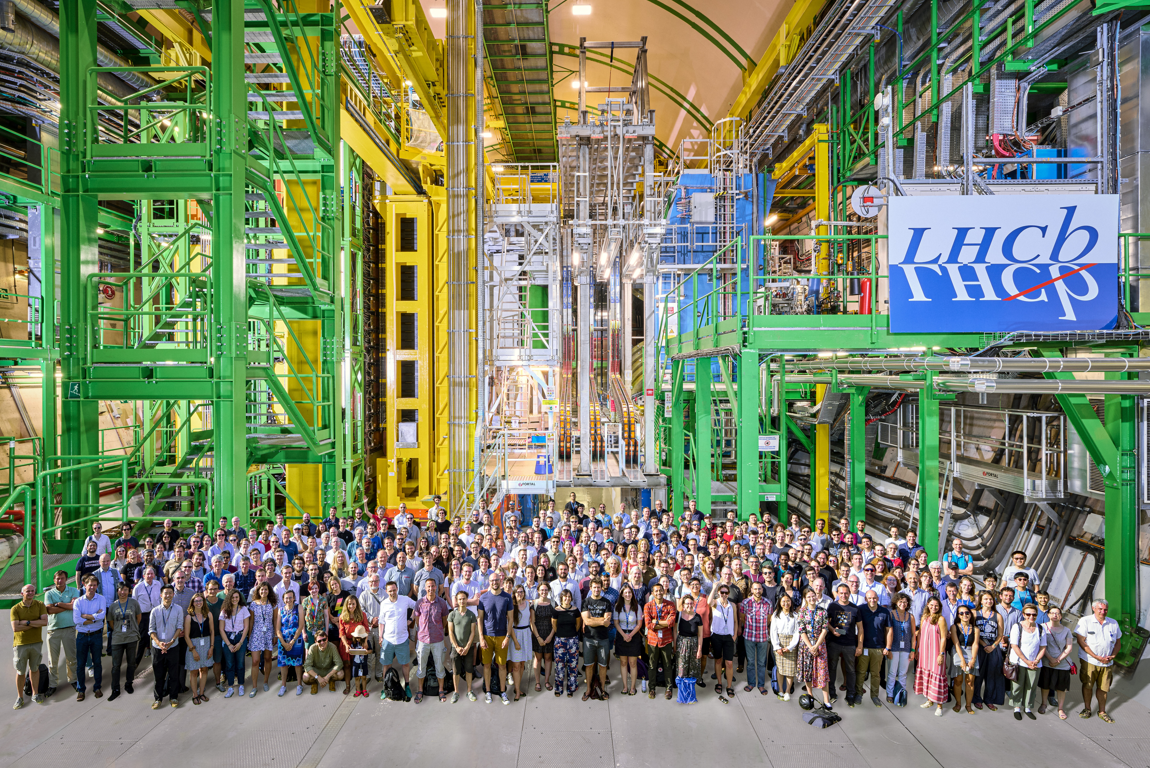
The LHCb collaboration in front of the LHCb Upgrade 1 detector in the underground cavern. The structures in green, yellow, grey and blue are used to support the different detectors. Credit: Sune Jakobsen (CERN EP-DT-TP) on behalf of the LHCb SciFi
- Confirmation
-
It looks like you're in the . If this is not your location, please select the correct region or country below.
You're headed to Hamamatsu Photonics website for GB (English). If you want to view an other country's site, the optimized information will be provided by selecting options below.
In order to use this website comfortably, we use cookies. For cookie details please see our cookie policy.
- Cookie Policy
-
This website or its third-party tools use cookies, which are necessary to its functioning and required to achieve the purposes illustrated in this cookie policy. By closing the cookie warning banner, scrolling the page, clicking a link or continuing to browse otherwise, you agree to the use of cookies.
Hamamatsu uses cookies in order to enhance your experience on our website and ensure that our website functions.
You can visit this page at any time to learn more about cookies, get the most up to date information on how we use cookies and manage your cookie settings. We will not use cookies for any purpose other than the ones stated, but please note that we reserve the right to update our cookies.
1. What are cookies?
For modern websites to work according to visitor’s expectations, they need to collect certain basic information about visitors. To do this, a site will create small text files which are placed on visitor’s devices (computer or mobile) - these files are known as cookies when you access a website. Cookies are used in order to make websites function and work efficiently. Cookies are uniquely assigned to each visitor and can only be read by a web server in the domain that issued the cookie to the visitor. Cookies cannot be used to run programs or deliver viruses to a visitor’s device.
Cookies do various jobs which make the visitor’s experience of the internet much smoother and more interactive. For instance, cookies are used to remember the visitor’s preferences on sites they visit often, to remember language preference and to help navigate between pages more efficiently. Much, though not all, of the data collected is anonymous, though some of it is designed to detect browsing patterns and approximate geographical location to improve the visitor experience.
Certain type of cookies may require the data subject’s consent before storing them on the computer.
2. What are the different types of cookies?
This website uses two types of cookies:
- First party cookies. For our website, the first party cookies are controlled and maintained by Hamamatsu. No other parties have access to these cookies.
- Third party cookies. These cookies are implemented by organizations outside Hamamatsu. We do not have access to the data in these cookies, but we use these cookies to improve the overall website experience.
3. How do we use cookies?
This website uses cookies for following purposes:
- Certain cookies are necessary for our website to function. These are strictly necessary cookies and are required to enable website access, support navigation or provide relevant content. These cookies direct you to the correct region or country, and support security and ecommerce. Strictly necessary cookies also enforce your privacy preferences. Without these strictly necessary cookies, much of our website will not function.
- Analytics cookies are used to track website usage. This data enables us to improve our website usability, performance and website administration. In our analytics cookies, we do not store any personal identifying information.
- Functionality cookies. These are used to recognize you when you return to our website. This enables us to personalize our content for you, greet you by name and remember your preferences (for example, your choice of language or region).
- These cookies record your visit to our website, the pages you have visited and the links you have followed. We will use this information to make our website and the advertising displayed on it more relevant to your interests. We may also share this information with third parties for this purpose.
Cookies help us help you. Through the use of cookies, we learn what is important to our visitors and we develop and enhance website content and functionality to support your experience. Much of our website can be accessed if cookies are disabled, however certain website functions may not work. And, we believe your current and future visits will be enhanced if cookies are enabled.
4. Which cookies do we use?
There are two ways to manage cookie preferences.
- You can set your cookie preferences on your device or in your browser.
- You can set your cookie preferences at the website level.
If you don’t want to receive cookies, you can modify your browser so that it notifies you when cookies are sent to it or you can refuse cookies altogether. You can also delete cookies that have already been set.
If you wish to restrict or block web browser cookies which are set on your device then you can do this through your browser settings; the Help function within your browser should tell you how. Alternatively, you may wish to visit www.aboutcookies.org, which contains comprehensive information on how to do this on a wide variety of desktop browsers.
5. What are Internet tags and how do we use them with cookies?
Occasionally, we may use internet tags (also known as action tags, single-pixel GIFs, clear GIFs, invisible GIFs and 1-by-1 GIFs) at this site and may deploy these tags/cookies through a third-party advertising partner or a web analytical service partner which may be located and store the respective information (including your IP-address) in a foreign country. These tags/cookies are placed on both online advertisements that bring users to this site and on different pages of this site. We use this technology to measure the visitors' responses to our sites and the effectiveness of our advertising campaigns (including how many times a page is opened and which information is consulted) as well as to evaluate your use of this website. The third-party partner or the web analytical service partner may be able to collect data about visitors to our and other sites because of these internet tags/cookies, may compose reports regarding the website’s activity for us and may provide further services which are related to the use of the website and the internet. They may provide such information to other parties if there is a legal requirement that they do so, or if they hire the other parties to process information on their behalf.
If you would like more information about web tags and cookies associated with on-line advertising or to opt-out of third-party collection of this information, please visit the Network Advertising Initiative website http://www.networkadvertising.org.
6. Analytics and Advertisement Cookies
We use third-party cookies (such as Google Analytics) to track visitors on our website, to get reports about how visitors use the website and to inform, optimize and serve ads based on someone's past visits to our website.
You may opt-out of Google Analytics cookies by the websites provided by Google:
https://tools.google.com/dlpage/gaoptout?hl=en
As provided in this Privacy Policy (Article 5), you can learn more about opt-out cookies by the website provided by Network Advertising Initiative:
http://www.networkadvertising.org
We inform you that in such case you will not be able to wholly use all functions of our website.
Close